

14 min. read
Chemical Engineer Resume Examples, Format, Skills & ATS Tips


A chemical engineer's resume is a professional document that highlights technical skills, process design knowledge, and experience streamlining chemical processes. It demonstrates the candidate's capacity to enhance process efficiency, uphold safety standards, and contribute to the manufacturing, oil and gas, pharmaceuticals, food processing, and petrochemical industries. Employers use this resume to assess the engineer's ability to manage chemical processes, solve technical problems, and enhance performance.
An effective chemical engineer resume also demonstrates experience in process optimisation, adherence to safety regulations, quality management, and continuous improvement. It indicates how the candidate collaborates with cross-functional teams, reduces process inefficiencies, enhances plant reliability, and contributes to cost-efficient operations.
A resume sample and template help job applicants understand what employers expect in the business world. They provide guidance on how to demonstrate work experience, technical expertise, and quantifiable accomplishments. Examining professional samples can help applicants create resumes that bypass ATS filters and attract recruiters' interest.
As a CPRW and active member of the Professional Association of Resume Writers and Career Coaches, I am aware of the specific criteria hiring managers use to screen chemical engineer resumes. I have also had experience in technical interviews and have witnessed firsthand how swiftly resumes and cover letters are reviewed and what impresses.
What Is a Chemical Engineer Resume? (Definition, Purpose & Importance)
A chemical engineer’s resume is a professional document that highlights their qualifications in designing, optimising, and improving chemical processes. This resume focuses on your technical knowledge, analytical thinking, and experience with industrial systems, plant operations, and chemical process safety.
This resume demonstrates your ability to improve efficiency, reduce waste, ensure regulatory compliance, and maintain quality across chemical operations. Employers use this document to evaluate your suitability for roles that require engineering expertise in process industries.
The difference between a general engineering resume and a chemical engineering resume lies in their areas of focus. A general engineering resume broadly covers technical skills across different engineering disciplines.
A chemical engineer's resume, however, emphasises specialised capabilities in chemical engineering, such as process design, mass and energy balances, heat transfer, reaction engineering, process safety, and plant optimisation. This focused resume highlights your ability to solve real industrial challenges in chemical and process-based environments.
Why Chemical Engineer Resume Examples Are Important for Job Success
Resume samples help potential employees understand what hiring companies expect. They demonstrate how to structure your experience, emphasise your technical skills, and showcase your successes in a way that feels professional and relevant.
When hiring a chemical engineer, a company looks for certain aspects in a candidate's resume. They desire to experience the tangible effects of process improvements, evidence of technical competence, a strong grasp of safety and compliance, and the ability to interact with operations, maintenance, and quality teams. The knowledge and skills you possess in engineering, and how you can enhance chemical systems, must be clear.
The resume samples also significantly contribute to ATS screening, the Applicant Tracking Systems search resumes based on keywords and proper layout. Examples can teach you the words and formatting used for your coursework and can pass automated filters. With an optimised resume, there are far greater chances of getting to a real hiring manager.
Want to know the benefits, challenges, and earning potential of engineering?
Here is my Advice for Students:
Key Responsibilities of a Chemical Engineer in a Resume Writing
Chemical engineers strike a balance between daily operation tasks and long-term process improvement activities. Your resume needs to reflect a combination of technical problem-solving and constant optimisation.
Working with the operations, maintenance, quality assurance, HSE, and production teams is central to the role. The chemical engineers also work across departments to ensure plant operations are safe, efficient, and compliant, and to resolve process bottlenecks and enhance overall performance.
Core Duties and Daily Tasks of Chemical Engineers (Resume Guide)
The optimisation of chemical processes involves assessing current solutions and identifying ways to enhance their efficiency, productivity, and safety. You analyse process parameters, equipment performance, material flow, and energy consumption to identify areas for improvement.
Chemical engineers monitor the plant's operations with respect to throughput, quality, pressure, temperature, and equipment conditions. You monitor critical process indicators and take swift action if performance falls below expected standards.
Root cause analysis is used to correct recurring process problems, equipment malfunctions, or quality variations. The aim is to find the root cause, not merely solve the symptoms. This structured method helps avoid recurring issues and supports more reliable operations.
Process optimisation initiatives usually lead to long-term enhancements. You design and implement modifications to the operating conditions, equipment configuration, process map, and control policies to enhance safety, minimise waste, and maximise efficiency.
Process Engineering and Plant Responsibilities in Chemical Engineering
Process documentation ensures consistency, safety, and knowledge transfer. You develop or revise standard operating procedures (SOPs), PFDs, P&IDs, batch records, and process instructions on which the plant operations are based.
Process safety systems can be used to minimise risk and guarantee compliance. You can contribute to HAZOP studies, risk assessment, safety audit, and regulatory documentation to ensure safe operations.
Continuous improvement techniques cause ongoing optimisation. Six Sigma, root cause analysis, DOE, and process capability analysis are techniques used to enhance plant performance, product quality, and cost efficiency.
Top Skills to Include in a Chemical Engineer Resume (Technical + Soft Skills)
A chemical engineer's resume should combine technical and professional soft skills. Technical skills demonstrate that you are knowledgeable about the science and systems underlying chemical operations, and soft skills demonstrate that you can effectively apply that knowledge within a team-based industry environment.
Technically, employers would like to observe knowledge of fundamental chemical engineering concepts, such as process design, heat and mass transfer, fluid mechanics, reaction engineering, process control, and unit operations such as distillation, filtration, separation, and heat exchange. If you have worked with simulation software such as Aspen HYSYS, Aspen Plus, ChemCAD, or MATLAB, that must be clearly mentioned, as these tools are widely used across most industries.
Improving processes is another aspect you should highlight on your resume. Process optimisation skills, root cause analysis skills, statistical analysis skills, continuous improvement skills, and quality control skills demonstrate that you can do more than just keep things going--you can make them go better. Knowledge of safety is also significant, particularly experience with HAZOP, PSM, GMP, ISO standards, environmental compliance, and chemical handling procedures.
On the soft skills side, problem-solving is essential because process issues can directly affect safety, production, and product quality. Communication is also critical, since chemical engineers often need to explain technical findings to operators, managers, and cross-functional teams clearly and practically. Strong teamwork, project coordination, adaptability, leadership, and time management can all strengthen your resume, especially if you’ve worked on plant upgrades, optimisation projects, or multi-department initiatives.
Best Chemical Engineer Resume Format (ATS-Friendly Structure & Layout)
For most people: reverse-chronological. Your most recent job comes first, and you work backwards. This is what hiring managers expect to see, and it's what ATS systems handle best.
How long should it be?
- Fresh graduate or less than 2 years of experience → 1 page
- 2–8 years of experience → 1 to 2 pages
- Senior engineers with 8+ years → 2 pages max
Section order:
- Contact info (name, phone, email, LinkedIn if you have one)
- Professional summary (2–4 sentences)
- Work experience
- Education
- Certifications
- Skills
Formatting basics:
- Use a clean, readable font — Arial, Calibri, or Times New Roman
- Font size 11–12 for body text, 14–16 for your name
- Standard 1-inch margins all around
- No photos, no graphics, no colored headers (ATS systems hate that stuff)
- Save as PDF unless they specifically ask for Word
ATS-Friendly Resume Formatting Tips for Chemical Engineers
The font and spacing guidelines apply to standard fonts such as Arial, Calibri, or Times New Roman. Use a font size of 10–12 points for body text. Use 1-inch margins on all sides.
The order of sections in the ATS needs to be logical. Add your contact information at the top, then a summary of who you are, your experience and education, and your skills. Such a standard arrangement helps automated systems make sense of your information.
The keywords placement plan involves using relevant terms more naturally in your resume. Make sure to include keywords in your summary, work experience bullet points, and skills section. Never make keywords look clumsy.
How to Write a Powerful Chemical Engineer Resume Summary (With Examples)
Your summary is that short paragraph right at the top. Most people either skip it or write something painfully boring like "hardworking engineer seeking opportunities to grow." Please don't do that.
A good summary has three things:
1. How many years of experience do you have
2. What is your main area (process optimisation, plant operations, pharma manufacturing, etc)
3. At least one real result you've achieved
Here's what that looks like at different career stages:
If you just graduated or have very little experience:
"Recent chemical engineering graduate with internship experience in process optimisation and plant operations. During my internship, I helped reduce raw material waste by 10% through process monitoring improvements. Strong foundation in mass balance, heat transfer, and process simulation. Ready to apply hands-on skills in a real manufacturing environment."
If you have around 3–7 years of experience:
"Chemical engineer with 5 years of experience improving process performance in manufacturing and chemical processing environments. Increased overall process efficiency by 16% through equipment optimisation and operating condition adjustments. Skilled in Aspen HYSYS, root cause analysis, and cross-functional teamwork. Focused on safe, efficient, and cost-effective plant operations."
If you're a senior engineer:
"Senior chemical engineer with over 10 years of experience leading large-scale process improvement and plant optimisation programs. Delivered a 22% increase in process throughput and a 28% reduction in waste generation across multiple units. Deep expertise in process design, HAZOP, Six Sigma, and engineering team leadership. Strong track record of turning technical problems into measurable business results."
Chemical Engineer (Oil & Gas) Resume Example
Pharmaceuticals Engineer Resume Example
How to Write an Effective Work Experience for a Chemical Engineer Resume
The work experience section is the heart of your resume. This is where you prove your value, not just describe your responsibilities. Many candidates make the mistake of listing routine tasks, but employers are much more interested in outcomes. Instead of simply saying what you did, show what improved because of your work.
Start each achievement with a strong action verb such as optimised, improved, reduced, implemented, analysed, designed, validated, or led. These words create a stronger sense of ownership and initiative. More importantly, support your statements with numbers whenever possible. Metrics such as percentage improvements, cost savings, throughput increases, waste reduction, energy savings, downtime reduction, or quality improvements make your resume much more credible.
For example, instead of writing "Worked on process improvements," a stronger version would be: "Improved process efficiency by 16% through operating-condition optimisation and equipment adjustments." Instead of saying Helped with quality issues, write: Reduced off-spec product rate from 3.0% to 1.1% by improving process control and troubleshooting deviations. This approach turns ordinary duties into strong, results-driven resume content.
Education Section in Chemical Engineer Resume (Degree, Coursework & Projects)
Most chemical engineering roles require at least a bachelor’s degree in chemical engineering or a closely related field. Your education section should be clear, professional, and relevant to the job. If your degree is not specifically in chemical engineering, strengthen the section by including relevant coursework such as thermodynamics, transport phenomena, heat transfer, mass transfer, process control, reaction engineering, and chemical process design.
Recent graduates can also mention academic projects, lab work, or research that directly supports their target role. If you completed a capstone project involving process design, simulation, plant optimisation, or safety analysis, that can add strong value to your resume. Certifications should also be listed in this section or in a separate certifications section if you have several.
Certifications for Chemical Engineers
Certifications can significantly strengthen a chemical engineer's resume, especially when they align with the target industry. In plant, manufacturing, and production-focused roles, Lean Six Sigma certifications are particularly valuable because they demonstrate your ability to improve efficiency, reduce waste, and support continuous improvement initiatives.
Other strong certifications include Process Safety Management (PSM) training, HAZOP certification, NEBOSH or other safety-related training, PMP or CAPM for project-oriented positions, and Aspen HYSYS or Aspen Plus training for simulation-heavy roles. In pharmaceutical settings, GMP or validation certifications can also be highly beneficial. When listing certifications, always include the certification name, the issuing organisation, and the date earned, if possible.
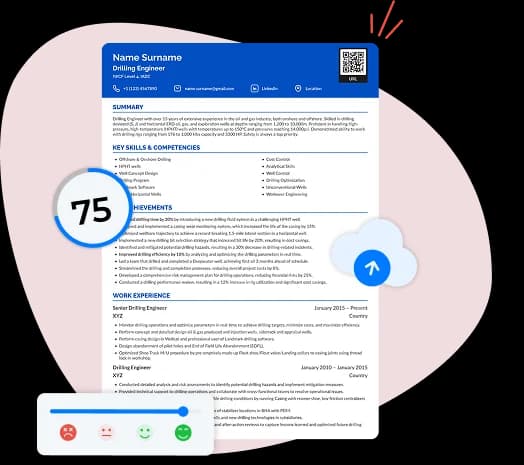
Resume Scanner
AI scanner performs 15 essential checks to ensure your resume is optimized for the jobs you're applying to.
SCAN RESUMEBest Certifications for Chemical Engineers to Boost Your Resume
ATS keywords are the terms applicant tracking systems use to determine whether your resume matches a job posting. Including the right keywords can greatly improve your chances of passing the first screening stage. However, the goal is not to stuff keywords everywhere—it is to use them naturally in the right places.
For chemical engineers, strong ATS keywords often include terms such as chemical engineering, process optimisation, process simulation, Aspen HYSYS, Aspen Plus, heat transfer, mass balance, energy balance, distillation, process control, root cause analysis, HAZOP, process safety, continuous improvement, plant operations, quality assurance, GMP, regulatory compliance, and process troubleshooting. These should appear naturally across your summary, work experience, skills, and certifications sections where relevant.
Conclusion: Choosing the Right Chemical Engineer Resume Example
The best chemical engineer resume is one that matches both your experience level and your target industry. Entry-level candidates should emphasise education, internships, and academic projects. Mid-level professionals should focus on measurable operational results and technical growth. Senior engineers should clearly demonstrate leadership, strategic thinking, and high-value process improvements that support business performance.
Using tailored resume examples gives you a practical framework for presenting your qualifications in a way that feels professional, relevant, and easy to understand. Strong examples show you how to structure your content, what details matter most, and how to position your achievements in a way that appeals to both ATS systems and hiring managers.
Most importantly, remember that no resume example should be copied exactly. Use examples as a guide, but customise your resume for every role you apply to. Refine your summary, align your experience with the job description, and use the right keywords based on the employer’s requirements. That extra effort can dramatically improve your chances of getting interviews and advancing your chemical engineering career.

Written by
Recent Posts


Pub: 27 Nov 2025 - Upd: 01 May 2026
17 min. read
Facilities Engineer Resume Examples: A Complete Guide and Templates
Pub: 07 Mar 2026 - Upd: 01 May 2026
23 min. read
Mechanical Design Engineer Resume Examples & Templates