

9 min. read
Should I Quit My Job? Here’s When It’s Time to Go
Hey guys!
In today’s article, I want to share my thoughts and personal experience on when it’s the right time to quit your job.
I’m Alex, a UK Chartered Engineer, European Engineer, and Certified Career Coach for Engineers.
Let’s start by going over some of the main signs that it might be time for a change. Then I’ll give examples, including from my own career.
Main Signs It Might Be Time to Leave
1. Constant dissatisfaction, stress, unfair treatment, discrimination, being humiliated at work, offensive language, poor company culture, and a toxic work environment.
2. No room for growth or development. This isn’t always the most important reason to change jobs. For example, for me, career growth is no longer a top priority. It’s usually more relevant for younger professionals who are still trying to grow their careers.
3. Low salary and no prospects for promotion. This is one of the strongest reasons, because let’s be honest, we all work to earn money.
4. Your personal life is suffering.
You’re constantly exhausted, and your job is taking all your energy and time.
There’s no work-life balance.
For example, I’ve never accepted jobs that involved long or unequal rotations like 45/15 or 60/30 days.
5. Health. If your job is hurting your physical or mental health, get out.
6. The company is clearly in decline. If we take the oil and gas industry, for instance, this could mean falling production rates and a company that’s slowly dying.
Many people also believe that if you’ve lost interest in your job, feel no motivation or inspiration, then it’s time to leave. I agree, but let’s be realistic, probably more than 90% of people working full time don’t really enjoy their jobs anymore. They’ve lost all passion, but they’ll keep working until retirement.
Now let’s go deeper and look at each of these points with examples.
Toxic Atmosphere
Let’s start with a toxic atmosphere, abusive bosses, delayed paychecks, or unpaid overtime. There’s no need to think twice. The real question is: why are you still there? You should be looking for a place where you’re respected and valued.
Is Low Salary Always a Valid Reason?
Now, is low salary always a valid reason to quit? First, we need to ask, what does “low” even mean? One person could be happy with a salary of $1,000 a month. Another could be unhappy with $10,000 a month.
It all depends on several factors:
• The country and city you live in, meaning the local cost of living.
• Your family size.
• Your needs and spending habits.
• And of course, many more things.
But generally, you should compare your salary to the market average in your country. If a good engineer in your field is earning $5,000 in one city and $15,000 in another, and your salary is only $6,000 when the country average is $7,000, then yes, your salary is objectively low.
When I started my career, I was making only $500 for a 14-day rotation. That was a low salary. Even after almost 10 years of working my way up, I was still only earning about $1,500 for the same 14-day shift, and that was still considered low.


Why I Didn’t Leave Earlier
So why didn’t I leave earlier? There were a few big reasons.
First, it was an international company with long-term career potential, especially the opportunity to move abroad, which was my main goal. Sometimes you have to make sacrifices for bigger dreams.
Second, the team. It was the best team I’ve ever worked with. My managers were expats. The atmosphere was fantastic. In nearly 10 years, no one ever raised their voice at me or used foul language.
Third, the learning opportunities. I was a young specialist with no experience, so I wasn’t very valuable on the job market yet. But here, I had the chance to study abroad. In the first five years, the company invested around $50,000 in my training. I used to travel to the Netherlands four to five times a year for training, staying there two to three weeks each time. That was amazing.
Fourth, work-life balance. The rotations were equal, 21/21 or 28/28, which worked great for me.
Fifth, strong career growth. In just six years, I went from a student to a department head, moving through four different job groups.
As a Chartered Mechanical Engineer (CEng), European Engineer (EUR ING), and Certified Maintenance and Reliability Professional (CMRP) with over 17 years in the oil and gas industry, I’ve learned to evaluate career decisions strategically. Sometimes a lower salary can be justified if you’re gaining international exposure, technical depth, and certifications that significantly increase your long-term market value.
So overall, everything about the job was great except the salary. But after almost 10 years, I started to feel burned out. I wasn’t interested in any of the other positions in the company anymore. I knew the equipment inside and out, and everything became too routine. I wanted to follow my dream, to work offshore and live somewhere warm.
So yes, low salary isn’t always the main reason to leave, especially if everything else suits you, like it did for me, and most importantly, if you understand why you’re earning less now and what it’s for. In my case, I had a goal. I spent years learning, growing, getting certified, and after almost 10 years, my salary increased ten times.
By the way, if you’re interested in building an international career or want my personal advice, join my Engineer-Millionaire Course:
Staying Too Long in the Same Position
I speak with engineers from different backgrounds all the time. Many of them say they’ve been doing the same job for eight to ten years, and their salary hasn’t changed at all. And only now they start thinking, “Something’s not right.”
I don’t understand why you’ve stayed that long. If your career hasn’t progressed at all, the time to quit was 10 years ago.
In general, here’s the rule: if you join a company and there’s no training, no career path, and the pay is low, that’s already your sign to start looking for another job. This is especially true if you’re a young professional with lots of potential to grow.
As a Certified Professional Career Coach (CPCC) and Certified Digital Career Strategist (CDCS), and having conducted over 200 technical interviews, I can confidently say that long stagnation is one of the biggest red flags on a resume. Employers want to see progression, responsibility growth, and impact. If nothing changes in your role for years, you are silently losing competitiveness in the market.
Priorities Change Over Time
For me personally, things like training and career progression are no longer a priority. I don’t really care if a company offers learning programs or if I can move up the ladder. I care more about salary, the company’s future, its culture and environment, workload, how well the work is organized, in other words, how comfortable I feel and whether I have a good work-life balance.
When you’re young, it makes sense to sacrifice a bit, especially salary, for long-term opportunities. But if you already have seven, eight, ten or more years of experience, and you still have a low salary, no training, no growth, a toxic boss or team, or the company itself is struggling, then it’s time to find something better.
If you’re considering quitting but still hesitate, pause and consider your situation objectively. Ask yourself: are you quitting your current job because of temporary emotions, or is this truly the best decision based on strategy and long-term goals? Analyze your skills, your market value, and what you can realistically achieve in the next two to three years if you stay versus if you move. Sometimes the right step is not immediately quitting your current role, but creating a clear transition plan that will help you find a better position without unnecessary risk. The key is to act consciously, not emotionally, and to understand yourself, your priorities, and what kind of professional and personal life you actually want to build.
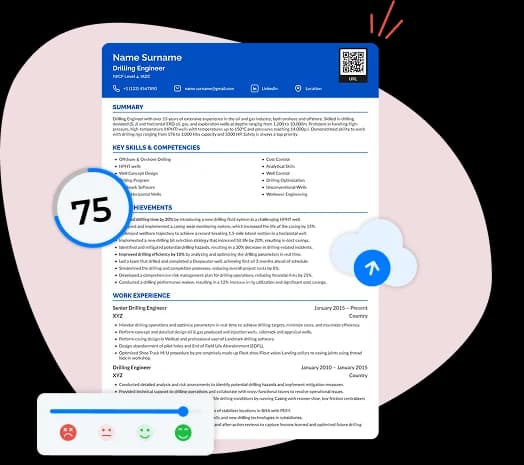
Resume Scanner
AI scanner performs 15 essential checks to ensure your resume is optimized for the jobs you're applying to.
SCAN RESUME
Written by
Recent Posts


Pub: 23 Jan 2025 - Upd: 01 May 2026
8 min. read
How Engineers Can Find a Job in the Middle East, Earn $100,000, and Enjoy Exclusive Benefits
Pub: 23 Dec 2025 - Upd: 01 May 2026
16 min. read
Engineering Technician Resume Examples & Templates 2026