

11 min. read
Controls Engineer Resume: How to Write an Effective Resume in 2026


A controls engineer resume is your most valuable tool for landing jobs in automation, manufacturing, or industrial engineering. By 2026, the job market expects not just technical depth but also measurable results, ATS optimization, and modern layout. Below, learn how to write a resume that gets noticed—supported by top controls engineer resume examples, ATS-ready content, and actionable advice.
As a Chartered Mechanical Engineer UK (CEng) with 17+ years of hands-on experience in the oil and gas industry, I have witnessed firsthand how measurable results on resumes grab attention. Having conducted over 200 technical interviews as an interviewer, I know that clear project outcomes backed by numbers significantly improve your chances.
Importance of Measurable Impact in Resume Bullets
Controls engineer resumes must show clear project outcomes. Hiring managers want results—such as reducing system downtime, improving production, or optimizing safety. Every bullet point should provide numbers or improvement metrics.
Measurable achievements help your resume stand out from others in the engineering field.
Good example: “Implemented automation controls, reducing equipment downtime by 22% across three manufacturing lines.”
Bad example: “Responsible for maintaining control systems.”
Resume Formats: Reverse-Chronological vs Hybrid
The format you choose can make a big difference. Most experienced engineers benefit from the reverse-chronological format. This clearly shows your progression in control engineering, listing your most recent and relevant roles first.
A hybrid resume can help if you’re junior, changing careers, or want skills to be seen quickly by an ATS. Hybrid layouts highlight core skills and key projects before work history, making it ideal for those with less experience but strong technical training.
Make sure the format you select fits your background and aligns with your target job description.
Key Sections to Include in Your Resume
Every controls engineer resume should include these sections:
- Header: Name, email, phone, LinkedIn, and location. Add only necessary details.
- Summary: Three to four concise lines focused on your control engineering experience.
- Skills section: Include both technical and soft skills matched to the role.
- Work experience: List jobs in reverse-chronological order, with outcome-focused bullets.
- Education: Degrees, school, graduation dates, and relevant coursework.
- Certifications: List control, automation, or engineering credentials.
- Optional sections: Publications, languages, awards, or hobbies that match the employer’s needs.
Writing a Powerful Controls Engineer Resume Summary
A resume summary sets the stage for your application. It should state your role, years of experience, industry focus, technical skills, and one or two key achievements. For example:
Controls engineer with 6+ years in automation and manufacturing. Proficient in PLC programming, SCADA integration, and safety compliance. Led control system upgrades that reduced process downtime by 30% and enhanced production throughput. Strong record of working with cross functional teams and delivering projects on time.
This summary is concise, includes keywords, and shows immediate value to employers.
If you want a practical walkthrough on how to tailor your resume and impress in your controls engineering job interviews, check out: Interview Questions? Use This Formula to Stand Out (STAR Method).
Tailoring, Optimization, and Advanced Tips
Aligning Your Resume with Job Descriptions and ATS
To pass applicant tracking systems (ATS) and get noticed, use keywords from the job posting. Mirror control systems, technical tools, or protocols named in the description. Align your work experience with the company’s requirements and highlight relevant details in every section.
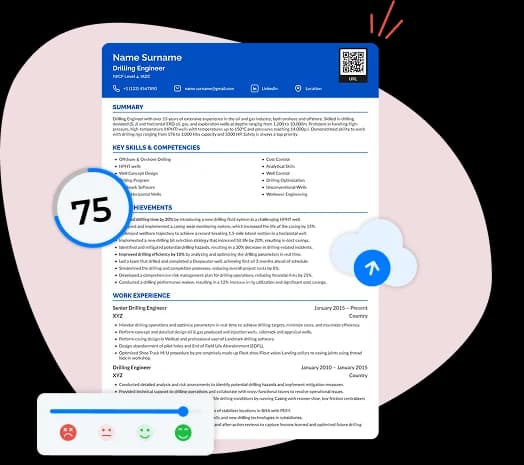
Resume Scanner
AI scanner performs 15 essential checks to ensure your resume is optimized for the jobs you're applying to.
SCAN RESUMEQuantifying Achievements with Metrics
Metrics show impact. Use numbers in your achievements, such as performance increase, downtime reduction, cost savings, or quality improvements.
Quick checklist:
- Did you improve process efficiency? By how much?
- Did you reduce errors or downtime? What was the percentage?
- Did you install or upgrade systems? How many?
- Did you support cross functional teams or projects? List outcomes.
With experience working in extreme environments from -50°C to +50°C offshore and onshore, I understand the critical importance of precise metrics. Having passed more than 50 technical and managerial interviews myself, I emphasize the value of quantifying improvements like downtime reduction or system reliability to demonstrate engineering impact.
Integrating Hard and Soft Skills Effectively
Controls engineers need both technical skills (PLC, HMI, DCS, instrumentation, data analysis) and soft skills (communication, problem-solving, teamwork). In your skills section, mix both types. In your bullets, show how you used these skills on the job.
Example: “Collaborated with cross functional teams to design and implement new automation systems, reducing production time by 18%.”
BONUS: Technical skills for Control System Engineer:
- Distributed Control System (DCS)
- Bently Nevada 3500
- GE Mark Vie
- Prosafe-PLC
- Logic Modification
- HMI
- P&ID Diagrams
- FAT/SAT
- Emergency Shutdown System (ESD)
- Fire & Gas System (F&G)
- CENTUM VP
- Network Architecture
- Yokogawa DCS
- Yokogawa Prosafe-RS
- Cause & Effect
- ExaOPC
- ExaPilot
- Exaquantum
- IEC 61131
- Modbus Protocols (Serial & TCP)
- IPS Hardware
- FAST/TOOLS (SCADA)
- MULCOM
- Safety Integrity Level SIL Study
- Programmable Logic Controllers PLC
- Calibration
- Control Valves
- RS232/485
- HART
- MODBUS
- Emerson-DeltaV
- InTouch Wonderware
- RSView
- Communication Protocols
- ROCKEWELL-Allen Bradley
- Control Networks
- Cyber Security
- SMART Instruments
- PROFIBUS
- MODBUS RTU
- MODBUS TCP/IP
- Smart Plant Instrumentation
- API MPMS, BS, ISO, IEC
- Metering System
- Analytical Equipment
- PRM
- FF-H1 protocols
- ICSS Project Engineering
- Coriolis Flowmeters
- Turbine Flowmeters
- Magnetic Flowmeters
- Ultrasonic Flowmeters
- Vortex Flowmeters
- V-Cone Flowmeters
- DP Flowmeters
- Control Valves
- Data Acquisition Systems
- Component Design
- Microprocessor-Based Instrumentation
- Mechatronics
- Discrete Mathematics
- Wireless Sensors Network
- CCTV
- High Integrity Protection Systems (HIPS)
- Micro Motion
- Flame Detectors
- Gas Detectors
- Smoke Detectors
- Moisture Analysers
- Gas Chromatograph
- Panawie
- MeterLink
- DanPack Metering System
- Fiscal Metering
- MON 2000
- Seeq
- ProLink
Resume Writing Tips for Junior and Career-Changing Engineers
If you’re entry-level or changing careers:
- Place the skills section and technical projects near the top.
- Use course projects, internships, or engineering lab experience.
- Highlight programming, HMI configuration, or simulation work.
- List academic or online control engineering achievements.
- Show your knowledge of PLCs, process control, and automation systems.
For a broader perspective on engineering career success and essential skills for the future, watch: TOP-20 Engineering Professions of the Future (not IT).
Using AI Tools for Resume Optimization
AI resume builders or online resume checkers can review your content against job requirements. They help with keyword alignment, check ATS-friendliness, suggest improvements, and ensure the sections are complete.
Pro tip: Use AI to polish language, but never let it generate exaggerated or false claims.
When and How to Write a Cover Letter
A cover letter is not mandatory for every controls engineer job, but it boosts your application in a competitive field. Use it to:
- Highlight project details or unique skills not on your resume.
- Connect your experience to the specific company or industry.
- Explain gaps, changes, or specializations in your work history.
- Present your motivation and interest in automation or control engineering.
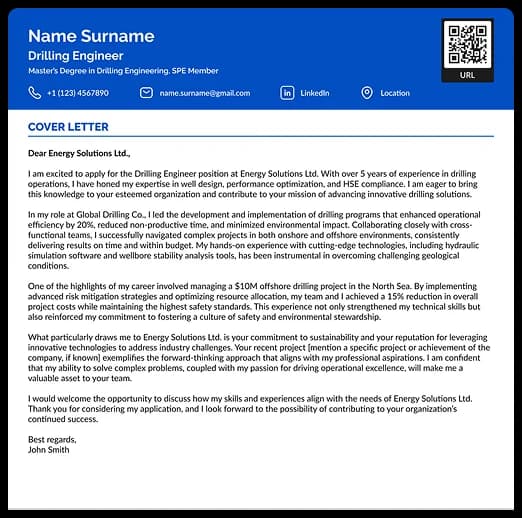
Cover Letter Builder
Use proven templates to craft an effective cover letter in minutes.
CREATE COVER LETTERResume Formatting Best Practices for Technical Roles
- Stick to clear, readable formats with enough white space.
- Use ATS-friendly fonts (Arial, Calibri, Helvetica).
- Limit resume length to one or two pages.
- Keep headings, bullet points, and language consistent.
- Avoid graphics and tables that hinder ATS parsing.
Education, Certifications, and Additional Sections
Listing Education and Relevant Coursework
List your most recent degree first. Include the degree name, university, graduation date, and location. For junior controls engineers, add technical coursework, such as “Control Systems,” “Automation,” or “PLC Programming.”
Certifications That Boost Your Resume
Certifications demonstrate advanced technical knowledge. Companies value candidates with:
- ISA Certified Control Systems Technician (CCST)
- Siemens or Rockwell Automation certifications
- TÜV Rheinland Functional Safety certification
- Certified Automation Professional (CAP)
- OSHA 30-Hour General Industry
Include the credential name, authority, and issue date.
Optional Sections: Publications, Awards, Languages, and Hobbies
- List relevant publications or articles on automation or control engineering.
- Add awards that show outstanding performance, innovation, or quality.
- Mention languages (English, Spanish) when required for international or cross-site teams.
- Share hobbies related to engineering, robotics, or science if they support your profile.
Resume Examples
Below are three ATS-friendly resume examples for controls engineers at different career levels and backgrounds.
Controls Engineer Resume/CV Example
Senior Controls Engineer | Industrial Automation Resume/CV Example
Junior Controls Engineer Resume/CV Template
Conclusion
An effective controls engineer resume highlights your technical achievements, quantifies each impact, demonstrates collaboration with cross functional teams, and aligns with industry requirements. Use real numbers, clear skills sections, and ATS-aligned formats. Always update your profile with new skills, certifications, and relevant achievements. Tailor every page to the company and role—increasing your chances to land interviews and reach your goals in automation and control engineering.
FAQ
How do I quantify my achievements as a controls engineer?
Show impact using numbers: “Reduced downtime by 22%,” “Achieved 99.5% system uptime,” or “Lowered project costs by $150K.” Quantifying outcomes makes your contributions clear to employers.
What is the best resume format for a controls engineer?
Reverse-chronological is best for experienced engineers, showing career progression. For juniors or career-changers, a hybrid with prominent skills is recommended.
Should I include soft skills on my resume?
Yes—employers value soft skills such as cross functional teamwork, communication, and problem solving, especially when supported with examples in your work experience section.
How can I tailor my resume for ATS compatibility?
Use job description keywords, match skill names exactly (like PLC, DCS, HMI), and use standard section headings. Avoid graphics and ensure clean formatting for ATS parsing.
When is it necessary to write a cover letter?
A cover letter is helpful for competitive controls engineering jobs or when your background needs extra context. Use it to explain unique qualifications or project experience.
What certifications are most valuable for controls engineers?
Popular certifications include ISA CCST, CAP, Rockwell and Siemens certificates, and TÜV Rheinland FS Eng. They show your commitment to staying updated in automation and control systems.
Can AI tools help improve my resume?
Yes, AI tools can assist with formatting, keyword checks, and drafting sections, but use your engineering judgment to ensure the content reflects your true experience and technical strengths.
What optional sections can enhance my resume?
Add sections for publications, awards, extra languages, professional affiliations (like ISA), and relevant hobbies that build your professional identity and show skills beyond standard roles.
Review resume samples to learn how to showcase your control chemical engineering experience, demonstrate your ability to deliver measurable results, and create value in any development or production environment.

Written by
Recent Posts


Pub: 12 Nov 2025 - Upd: 01 May 2026
8 min. read
What Certifications Do You Really Need to Work Worldwide as a Drilling Engineer? (Full Guide)