
9 min. read
Design Engineer Resume Examples & Writing Guide


Crafting a Strong Design Engineer Resume
To create a design engineer resume that stands out, focus on sections that highlight your ability to deliver high-quality projects, solve complex engineering problems, and use industry-standard tools. Make sure your resume is ATS-friendly and contains keywords relevant to design engineering positions.
As an International Engineering Career Coach with 17+ years of experience and a Chartered Mechanical Engineer, I understand what recruiters seek in concise, targeted summaries. I’ve also conducted over 200 technical interviews, so I know how to highlight achievements that truly matter.
Professional Summary and Objective Writing Tips
Your resume summary should be concise, targeted, and showcase expertise in design engineering. Use data to highlight measurable achievements and specialization in the engineering field. If you’re applying for entry-level or internship positions, consider a brief objective stating your career goals and how you want to contribute to innovative projects.
Example summary:
“Mechanical design engineer with 5+ years of experience developing consumer products and automotive systems. Proven performance in cross-functional teams, reducing product development cycle time by 20% through rapid prototyping. Proficient in SolidWorks, AutoCAD, and MATLAB. Passionate about sustainable engineering and innovative design solutions.”
Showcasing Technical Skills Effectively
Hiring managers look for specific technical skills in every design engineer resume. List relevant expertise in CAD software, 3D modeling, simulation tools like ANSYS, and materials science. Show proficiency with manufacturing processes and product lifecycle management systems. For every listing, explain how you used the skill to improve processes or outcomes.
Technical skills section:
- SolidWorks, AutoCAD, CATIA, PTC Creo
- Finite element analysis (FEA), ANSYS simulation
- Matlab, Python scripting for engineering data
- Rapid prototyping, 3D printing, CNC processes
- GD&T, tolerance analysis, and DFM principles
When preparing your design engineer resume, incorporating insights from industry experts can greatly enhance your application. If you want a deeper dive into mastering the interview process and standing out to hiring managers, see: How to Succeed in Any Job Interview | My 10 Golden Rules:
Quantifying Achievements with Metrics
Strong resumes use numbers to show impact. For each role or project, quantify results such as cost reductions, process improvements, design cycle times, or increases in product reliability.
With extensive experience working in extreme environments from -50°C to +50°C and having passed more than 50 technical interviews myself, I’ve seen firsthand how quantifying your impact with real data can make your resume stand out. Use clear, measurable results to demonstrate your engineering value.
Good example:
“Redesigned medical device enclosure, leading to a 25% reduction in material costs and a 30% improvement in assembly time.”
Demonstrating Problem-Solving and Innovation
Innovation and problem-solving are critical in the design engineer role. Describe how you applied analytical skills, creativity, and AI-driven tools to solve complex problems or deliver innovative products.
Example:
“Implemented generative design workflows using AI, resulting in a 18% weight reduction while maintaining strength in aerospace components.”
Tailoring Your Resume to Job Descriptions
Every engineering job posting has unique keywords and requirements. Tailor your resume for each application by matching descriptions, integrating industry-specific language, and emphasizing experiences with similar challenges, products, or systems.
Structuring Work Experience and Skills
Well-structured work experience and skills sections clearly show career progression, technical depth, and impact in design engineering. Use concise bullet points and action verbs relevant to the industry.
Highlighting Design Projects and Contributions
Feature major design projects, prototypes, or product launches. For each, focus on the engineering process, cross-functional collaboration, and measurable successes.
- Completed end-to-end design of smart IoT thermostat, exceeding performance requirements and achieving 92% first-pass yield in production testing.
- Led mechanical subsystem overhaul for robotic assembly line, raising throughput by 12% through component redesign.
Understanding the key certifications for mechanical engineers can significantly boost your resume's appeal. I also covered this topic in detail in the video: Mechanical Engineer KEY CERTIFICATES:
Using Industry-Specific Action Verbs
Start each point with verbs that reflect engineering work:
- Designed, developed, led, optimized, implemented, validated, managed, prototyped, improved, tested, reduced, collaborated, analyzed.
Showcasing Career Growth and Leadership Roles
Engineering employers value evidence of advancement and leadership. Highlight roles where you led teams, mentored peers, or owned major project deliverables.
- Transitioned from junior to senior design engineer, eventually leading design reviews and mentoring two engineers.
- Directed cross-departmental teams to optimize component design for mass production, yielding $1.2M annual savings.
Illustrating Cross-Functional Collaboration
Engineers rarely work in isolation. Showcase your work with manufacturing, electronics, quality assurance, and product management teams.
- “Collaborated with firmware and electrical teams to co-design PCB layouts, optimizing product reliability and EMC performance.”
Incorporating Technical Tools and Software Expertise
Be clear about advanced tools, design systems, and software you have mastered. List proficiency levels (e.g., “SolidWorks – Advanced,” “ANSYS – Intermediate”).
- Used SolidWorks and ANSYS for 3D modeling, simulation, and mechanical validation on large-scale industrial equipment.
- Managed ECOs, BOMs, and supplier drawings in PTC Windchill for consumer electronics projects.
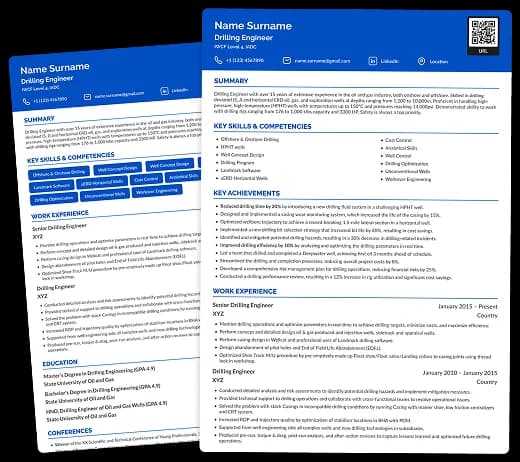
Using a professional resume template and cover letter generator will help you clearly present your skills and accomplishments, highlight successful product designs, and demonstrate measurable efficiency improvements.
Resume Builder
Use proven engineering templates to build a job-winning resume in minutes.
CREATE RESUMEEssential Hard and Soft Skills for Design Engineers
Balance technical abilities with soft skills crucial for success in product design:
- Hard: 3D CAD, FEA, materials science, manufacturing processes, rapid prototyping
- Soft: Problem-solving, project management, cross-functional collaboration, adaptability, clear communication
Formatting a Skills Section for ATS and Recruiters
Format your skills for both machine and human readers:
Example:
- Design Tools: SolidWorks (CSWP), AutoCAD, PTC Creo
- Simulation: ANSYS, FEA, CFD
- Programming: MATLAB, Python
- Process: DFM, GD&T, rapid prototyping
- Soft Skills: Team leadership, innovation, time management, adaptability
Skills, Certifications, and Education
Engineering managers expect to see a strong education section, recognized certifications, and proof of ongoing skill development.
Relevant Certifications to Include on Your Resume
Highlight certifications that match job requirements:
- Certified SolidWorks Professional (CSWP), ASME GD&T (Y14.5)
- ANSYS Mechanical Level I, Lean Six Sigma Green/Yellow Belt
- Project Management Professional (PMP), Certified Product Design Engineer (CPDE)
Education Section Best Practices
List relevant degrees first (Bachelor of Science in Mechanical Engineering, etc.), include graduation dates, coursework in mechanical design, and honors if applicable.
- “Bachelor of Science in Mechanical Engineering, University of Washington, 2018—Relevant coursework: Product Development, FEA, Materials Science.”
Additional Professional Qualifications and Continuous Learning
Show dedication to professional development:
- Training in 3D printing, online courses on advanced simulation,
- Conference presentations or professional association membership (e.g., SME, ASME).
Resume/CV Examples
Combined Design Engineer Resume Samples
Below are three ATS-friendly, real-world engineering resume examples at different career stages. Each follows best practices for presenting technical skills, impact, and career growth.
Resume/CV Example 1: Senior Mechanical Design Engineer
Resume/CV Example 2: Mid-Level Product Design Engineer
Resume/CV Example 3: Entry-Level Mechanical Design Engineer
FAQ / Q&A
How do I tailor my resume for different design engineering roles?
Identify keywords in the job posting (such as “SolidWorks,” “product lifecycle management,” or “GD&T”), then match your skills and experiences to their requirements. Edit your summary, skills section, and project bullets to incorporate the most relevant terms each time you apply.
What are the most important skills to highlight on a design engineer resume?
Essential skills include 3D CAD proficiency (SolidWorks, AutoCAD), FEA and simulation, DFM, prototyping, teamwork, and clear communication. You should also list industry-specific tools and software as required.
How can I effectively quantify my achievements?
Use metrics: percentages, cost reductions, cycle time improvements, reliability increases, or direct financial impact. For example: “Reduced part count by 28% and production cost by $240K per year.”
What are common mistakes to avoid in a design engineer resume?
Avoid generic statements, irrelevant skills, or long blocks without metrics. Tailor your resume for each job instead of sending out the same document. Proofread for errors and maintain consistent formatting.
How should I format my resume for applicant tracking systems (ATS)?
Use clear headings, standard fonts, and no tables/graphics. List job titles, responsibilities, and skills in simple bullet points with precise, keyword-rich language.
What certifications add value for a design engineer?
Certifications like CSWP (Certified SolidWorks Professional), Six Sigma, ANSYS simulation certificates, GD&T, and PMP are highly valued. New graduates can benefit from entry-level SolidWorks or AutoCAD certificates.
How do I showcase problem-solving on my resume?
Describe specific engineering challenges, how you analyzed or solved them, and what the outcome was. For example: “Solved equipment overheating issue by redesigning enclosure ventilation, lowering operating temperature by 8°C.”

Written by
Recent Posts

Pub: 14 Jan 2026 - Upd: 01 May 2026
18 min. read
Electrical Engineering Technician Resume: Examples, Skills & Tips (2026)

Pub: 12 Nov 2025 - Upd: 01 May 2026
8 min. read
What Certifications Do You Really Need to Work Worldwide as a Drilling Engineer? (Full Guide)
Pub: 12 Feb 2025 - Upd: 01 May 2026
6 min. read
5 Interview Questions for an Engineer (and how to answer)