

52 min. read
Junior Data Engineer Resume Examples That Actually Get You Interviews (2026 Edition)
Struggling with your first resume is completely normal. Every “entry-level” job wants 2–3 years of experience. Every internship expects you to already know production-scale systems. So, when you're fresh out of school, or trying to break into data engineering after working in analytics or software dev, you may feel like you’re stuck between “not enough experience yet” and job postings expecting a fully polished mid-level engineer.
But here’s the good news: you don’t need a flawless background to land your first data engineering role in a top-tier company like FAANG. What you do need is a resume that right speaks for you — one that shows what you can do, how fast you learn, and highlights the value you’re ready to bring to a team. In this dynamic job market, the ability to craft a tailored narrative around your skills is critical.
As a Certified Professional Career Coach (CPCC) who has worked with hundreds of professionals across various organizations, I can tell you that crafting a compelling junior data engineer resume is easier than you think once you understand what employers are actually looking for.
In this guide, as someone who started exactly where you are and worked my way up from junior to senior level engineer, I'll help you create a resume that positions you for success. We'll cover:
● Strong resume examples that work for Junior Data Engineer.
● How to tailor your resume for specific companies and job posts, emphasizing the right technical skills and qualifications.
● What recruiters and hiring managers truly look for — and the common mistakes that can quietly hurt your chances.
● How to structure every resume section: from your header and professional summary to projects, internships, and certifications to ensure consistency and a professional presentation.
● How to integrate keywords, metrics, and strong bullet points, so your resume doesn’t disappear into the ATS void and can be easily tracked.
● Essential tips for showcasing your educational background, development experience, and growth trajectory through clear, achievement-oriented language.
If you’re applying for your first real data engineering role or trying to transition from analytics, software engineering, or a related field, this article will guide you step by step through the process. We’ll provide actionable insights you can implement immediately.
Let’s build a resume that actually works, so a recruiter spots you immediately during screening, and a hiring manager feels like you’re already showing up prepared. Ready? Let’s dive in.
Want to Skip the Manual Work? Try Our Resume Builder
Spending hours in Google Docs tweaking formatting? Let technology handle the design so you can focus on your achievements. The resume builder at engineernow.org is intended specifically for engineers.
You will get:
● Smart, ATS-Friendly Templates: Choose from templates designed to pass applicant tracking systems, with the right sections (skills, projects, experience) already optimized.
● Guided Content Creation: Get suggestions for action verbs and phrasing based on thousands of successful data engineering roles. Just fill in your details.
● One-Click Customization: Easily tailor your resume for each application. Change the headline, emphasize different skills, and generate a new PDF in seconds—without starting from scratch.
● Export & Download: Get a polished, single-page PDF ready to send. It’s the fastest way to go from a blank page to an interview-ready application.
Start building a resume that gets results. Sign up at engineernow.org
Junior Data Engineer Resume Example #1
Alex Hamilton
Junior Data Engineer
San Francisco, CA
Email: alex.hamilton@email.com | LinkedIn: linkedin.com/in/alexham-data | GitHub: github.com/alexham-dev
Objectives
Motivated Junior Data Engineer with a strong foundation in building and optimizing data pipelines. Hands-on experience through academic projects and internships using Python, SQL, and cloud services. Eager to apply technical skills and problem-solving abilities to support data-driven decision-making and contribute to organizational goals.
Key Skills & Project Proof
● Data Pipeline Development
○ Built an automated ETL pipeline with Python and Apache Airflow for a university project, processing data from multiple API sources and reducing manual data collection time by 10 hours per week.
● Cloud Data Warehousing
○ Designed and implemented a cloud-based data warehouse on Amazon Redshift, organizing raw data into a star schema which improved query performance for analytics by 40%.
● Streaming Data Processing
○ Developed a real-time data streaming prototype using Kafka and Spark Structured Streaming to process live social media feeds, handling approximately 50,000 messages per day.
Work Experience
Data Engineering Intern | Netflix | Los Gatos, CA
May 2024 – August 2024
Supported the content analytics team by assisting with data validation tasks and maintaining existing Airflow DAGs. Gained practical experience with Python, SQL, and Apache Spark in a production environment, demonstrating capacity to work with enterprise-level systems. Actively participated in team reviews and contributed to process improvements.
Education
Bachelor in Data Science | University of California, Berkeley
Relevant Coursework: Data Structures & Algorithms, Database Systems, Cloud Computing, Distributed Systems
Languages
English, French
Why This Resume Works:
This junior data engineer resume effectively showcases potential over extensive experience. It utilizes functional format to highlight projects that demonstrate core competencies such as pipeline development and cloud warehousing. Quantifying impact (e.g., “10 hours per week,” “40% improvement”) provides tangible evidence of skills, directly applying the guide's advice to demonstrate, not just list, abilities.
The resume follows standard formatting that's easy to read and parse by both ATS systems and human reviewers. It successfully turns academic experiences into professional achievements.
How to Stand Out as a Junior Data Engineer (Even When You Feel Underqualified)
Here's the thing that messes with every junior engineer's head: you open a job posting that says “entry-level”, scroll down, and suddenly you're staring at requirements like “3+ years with Airflow”, “production Spark experience”, and “Kubernetes expertise.” You close the tab. It's easy to think, maybe I'm not ready.
Stop right there.
I'm about to let you in on something that took me way too long to figure out: companies aren’t looking for a fully polished engineer at this level. Those job descriptions? They’re wishlists—usually written by someone dreaming about a senior data engineer at a junior-level salary. What they actually need is someone who learns fast, debugs without hand-holding, and ships working pipelines without breaking prod. They seek individuals with foundational skills, adaptability, and a proactive mindset.
Your resume's job isn't to prove you're already the perfect hire. It's to prove you're close—and that you'll get there faster than everyone else. Creating a resume that demonstrates this capacity requires understanding what truly matters to employers. It’s about highlighting your problem-solving skills and your ability to develop efficient data solutions, even on a smaller scale.
Here's how you create a resume that gets noticed:
Show You Actually Build Stuff (Not Just Study It)
Anyone can list Python and SQL on their resume. What gets attention is proof that you actually use those skills to solve a real task. Did you ship a side project to GitHub? Jump into a hackathon? Contribute to an open‑source repo just because you wanted to? That’s gold for your junior data engineer resume. These experiences demonstrate creativity, leadership, and an active engagement with the data engineering technology.
Adding a Personal Projects section is a power move. It tells recruiters you’re not just memorizing syntax—you’re building stuff because you’re curious and motivated. This approach to resume building demonstrates your proactive nature and genuine interest in the field. It’s a vital differentiator in a crowded market.
A “Personal Projects” section filled with things you built on your own time sends a stronger message about your drive than any generic skill list ever could.
Pro tip: If you don't have a side project yet, start one this weekend. Spin up a simple ETL pipeline that draws data from a public API, transforms it, and loads it into Postgres. Document it on GitHub with a clean README. Now you have a talking point that 80% of applicants don't have on their resumes. This single addition can significantly improve your value.
Show Your Skills in Action
Saying you’re “proficient in Spark” on your resume doesn’t mean much. Showing how you used Spark to solve a problem does. In your projects and experience sections, directly link the tools that you used to the results you achieved. This method of resume building is essential for entry level data engineer candidates. Employers want to see that you can leverage technology to automate processes and drive efficiency.
Bullet example for junior data engineer resume:
“Optimized SQL queries in Redshift, reducing dashboard load time from 45s to under 10s.”
That’s practical proficiency. Recruiters don’t just want to know you’ve heard of Kafka—they want to see you’ve actually wrangled data with it. Mention specific frameworks and the resulting impact on data processing efficiency or system reliability.
Quantify Everything You Can — Turn Academic Projects Into Real Wins
You might not have years of experience optimizing large-scale data pipelines in an enterprise environment, but you absolutely solved real problems. The difference between a class project and professional work on your resume is mostly just how you talk about it. And the key is quantifying impact, even in academic settings.
This strategy for resume writing presents your educational achievements as professional-grade work. Use metrics like processing efficiency gains, data volume handled, or error reduction to provide concrete evidence of your contributions.
Instead of:
❌“Worked on a class project to analyze data.”
Try:
✅ “Developed a Python ETL pipeline used by our team to extract and transform a 10 GB dataset, improving data processing time by 30% and enabling more accurate analysis for the final report.”
See what happened in this resume example? Same project. But the second version:
✔ Uses industry terminology (ETL, real-time analytics)
✔ Quantifies scale (10 GB)
✔ Shows measurable improvement (30% faster)
✔ Implies collaboration (“our team”)
✔ Highlights a direct achievement resulting in a better outcome.
Even if your “team” was three other students and your “dashboard” was a Matplotlib notebook—frame it like the real work it was. You designed data flows. You optimized queries. You handled messy data. That's data engineering, and that's what your resume should present. This focus on results is what transforms basic responsibilities into significant accomplishments.
The universal template for data engineer resume bullets:
[Action verb] + [specific technical tool] + [data scale/complexity] + [measurable outcome]
Every bullet point on your resume should follow this pattern. Not because you're exaggerating—but because you're finally giving yourself credit for the actual engineering work you did. This consistent approach to resume writing ensures quality across all your resume sections. Strong action verbs like “Developed,” “Optimized,” or “Implemented” are critical to capture attention.
What recruiters say:
“Hiring managers aren’t buying your past — they’re buying your potential to solve future problems.” — Edward L.
“I hire junior engineers who can point to something they built and explain why they built it that way. The technical decisions matter more than the scale.” — Michael K.
Okay, now that you know how to frame your story on your resume.
Up next, let’s break down how to structure all this so your resume lands with both recruiters and ATS systems. We’ll dive into the ideal resume format and how to organize your information for maximum impact.
Resume Example #2 — Junior Data Engineer (Analytics & Cloud Focus)
Maya Thompson
Junior Data Engineer
Seattle, WA | Email: maya.thompson@example.com | LinkedIn: linkedin.com/in/mayathompson | GitHub: github.com/mayadev
Summary
Detail-oriented Junior Data Engineer with a strong academic background in computer science and hands-on experience with building, maintaining, and improving data pipelines in cloud environments. Skilled in Python, SQL, ETL, and data modeling, with a data-driven mindset and the ability to deliver concise, clear solutions. Strong interest in real-time systems, streaming, ML workflows, and cloud-native technologies. Committed to growing within a fast-paced engineering environment and contributing to team success.
Technical Skills
● Languages: Python, SQL, Scala
● Tools: Airflow, Spark, Kafka, NiFi, dbt
● Databases: PostgreSQL, MySQL, Snowflake, MongoDB
● Cloud: Azure, AWS (S3, Lambda, EMR), GCP BigQuery
● Other: APIs, Tableau, Git, CI/CD basics, data warehousing, data modeling, monitoring systems
Work Experience
Data Engineering Intern — Netflix (Content Analytics Team) | April–July 2024
● Developed automated ETL pipelines using Python and Airflow, supporting daily data ingestion across various sources.
● Built dashboards in Tableau for analysts, improving reporting speed and reducing manual tasks, demonstrating strong analytical abilities.
● Analyzed large datasets, identifying data quality issues and improving accuracy by 27%, ensuring reliable data for decision-making.
● Collaborated with engineers, analysts, and data scientists to ensure reliable delivery of data for ML models, showcasing interpersonal skills and capacity to work across different teams.
Projects
Cloud Data Warehouse Project
Designed and implemented a mini data warehouse on Redshift, organizing raw data into optimized tables and applying data modeling best practices. Performed processing and transformation steps, improving query performance by 30%. This project demonstrates capacity to manage data storage solutions at scale.
ML Feature Engineering Pipeline (Academic)
Built a pipeline using Spark to generate predictive features for machine learning use cases. Integrated data sources, automated validation steps, and improved processing time by 18%. This experience presents practical knowledge of data workflows supporting ML applications.
Education
Bachelor of Science in Computer Science | University of Washington
● Relevant coursework: Data Science, Big Data Systems, Machine Learning, Databases, Cloud Architecture, Statistics
Certifications
● Google Cloud Digital Leader
● Microsoft Azure Fundamentals
● IBM Data Engineering Certificate
Additional Experience & Skills
● Strong communication and problem-solving abilities
● Experience working with cross-functional teams
● Familiar with ATS formatting, reverse-chronological layout, and resume writing best practices
● Passion for continuous learning, cloud technologies, and modern data architectures
Structure and Format of a Junior Data Engineer Resume (That Works in 2026)
Getting a junior data engineer resume noticed isn’t about flashy layouts or stuffing every tool you’ve ever heard of into one page. It’s about using a clean, predictable format that both recruiters and ATS systems can understand instantly.
Hiring managers expect familiar section headers and a logical flow that makes their job easier. ATS software expects standard formatting. When your resume flows logically, it highlights your career potential, shows off your analytical mindset, and makes sure your profile doesn’t get lost in a crowded stack of candidates.
And don’t stress — even if you’re just starting out, you can absolutely catch a recruiter’s eye with your resume. What matters is showing preparation, attention to detail, and a genuine drive to grow in data engineering. Your resume should reflect these qualities throughout all its sections.
Best Resume Format for Junior Data Engineers in 2026
Forget the “functional vs chronological” debate you see on career blogs. As a Certified Professional Resume Writer (CPRW) who has rewritten and reviewed hundreds of engineering resumes, I know what actually works right now when you’re a junior trying to break into data engineering:
Use a hybrid format. That's it.
It’s basically chronological, but with a prominent skills and projects section right at the top — because that's your real selling point when you have under two years of experience. This approach to resume building is particularly effective for entry level data engineer candidates who need to emphasize skills over extensive work history.
Here's the exact order for your resume that gets the most interviews today:
1. Header (name, contact, LinkedIn, GitHub)
2. Professional Summary (3–4 concise lines)
3. Technical Skills (grouped by category, scannable in seconds)
4. Projects (your strongest section — 3–4 bullet-proof projects with metrics)
5. Work Experience / Internships (reverse chronological, if applicable)
6. Education
7. Certifications (if relevant)
Why this resume format beats traditional formats:
Pure functional resumes (skills-first, experience buried) signal “I have no real experience” and get rejected by most recruiters at tech companies and competitive startups.
Pure chronological resumes only work if you already have 1–2 solid internships. Without them, you're left with half a page of white space.
The hybrid version of the data engineer resume does two things perfectly:
● Front-loads the stuff that proves you can actually build pipelines (skills + projects)
● Still looks “normal” to both humans and ATS (no weird headings like “Core Competencies” or “Areas of Expertise” that ATS can’t parse)
When to switch to a pure reverse-chronological resume format:
Only after you have at least two relevant internships or one very strong one (3+ months where you touched production data). Until then, the hybrid resume is king for junior engineers.
Bottom line: Recruiters in 2026 don't care about format theory when reviewing your resume. They want to find your “Projects” section in under 10 seconds and see real code, real tools, and measurable results. Give them that in a clean, predictable layout, and you're ahead of 80% of applicants. Nothing else matters.
Resume Structure for Junior Data Engineers
Here’s the exact structure for your resume that works right now. This guide will help you create each section of your resume with precision.
1. The Header: Your Contact Line on Your Resume
Keep the resume header clean, functional, and impossible to miss.
Include:
● Your name (16-18 pt, bold)
● Your Title
● Phone number, email, LinkedIn, and GitHub links.
● City, State (if required)
That's it.
No street address. No headshot (this isn't Europe) and No “References available upon request” (obviously they are).
Crucial: Make sure your GitHub is public and has something in it. Many employers will check this link from your resume.
2. Professional Summary – 3–4 lines, zero fluff
This is your hook. Ditch the fluffy objective. Write a Professional Summary.
Formula for the strong resume summary:
[Your title] + [core skill/experience] + [tangible outcome/project] + [goal/value add].
Bad example for a data engineer resume objective:
“Passionate recent grad looking to grow…”
Good example:
“Junior Data Engineer skilled in building scalable ETL pipelines with Python and Airflow. Built Airflow + Spark pipelines that cut latency 40% and handled 200K events/day. Eager to apply cloud and data modeling skills to enhance data reliability and contribute to organizational success.”
Rule: Tailor the last sentence to the company. It shows you did your homework, which employers appreciate when reviewing your resume.
3. Technical Skills
This section is not only your keyword buffet for the ATS, but also a place to showcase your 3–4 strongest technical skills through concrete achievements and outcomes. Group tools and technologies into clear, logical categories.
Example for data engineer resume skills section:
● Programming Languages: Python, SQL, Java
● Big Data: Spark, Kafka, Hadoop, BigQuery
● Cloud Platforms: AWS (S3, Redshift, Lambda), GCP, Azure
● Databases: PostgreSQL, MySQL, MongoDB
● Other data engineering tools: Airflow, dbt, Git, Docker
Be honest: Don't list “Advanced Kafka” if you've only run a local tutorial. “Familiar with” or “Exposure to” is fine for exploratory skills in a junior data engineer resume. This honesty will serve you well throughout the interview process when questions about your professional background come up.
A strong resume doesn’t guarantee you’ll get the job — it gets you the interview and sets the starting point for your conversation with HR. The real decision is made in the interview itself. To learn how to present yourself with confidence and make a strong impression, watch this video where I break down 10 practical rules that work for both junior and senior candidates.
4. Projects
This section is the best alternative to “Experience” in a junior data engineer resume, and a strong way to demonstrate your skills through hands-on work. Many hiring managers consider this the most valuable section of an entry-level data engineer resume.
Include 3–5 projects max.
Format:
● Project Name, type
● Your role
● What you built and what tools you used
● What problem it solved
● The results – always with numbers (cost savings, reducing pipeline downtime, etc.)
● Extra credit (optional) – schema design, etc.
Example:
Real-Time Clickstream Pipeline – Personal project, 2.4k GitHub stars
- Ingested 150K events/min from Kafka → processed with Spark Structured Streaming → sank to Delta Lake
- Reduced end-to-end latency from 90 sec to <4 sec (96% improvement)
- Deployed on AWS EMR + S3, orchestrated with Airflow; added schema registry + data contracts
5. Work Experience (Internships / Relevant Roles)
Even internships matter for junior candidates.
Format:
● Job Title, Employer name, dates
● 2–5 bullets with your duties, results, projects you were involved in. Use this framework for describing: Strong action verb + tool + result.
Focus on what systems did you touch? What was the data's scale or impact? And (great, if applicable) how did your work contribute to organizational goals?
Example for a junior data engineer resume:
Data Analyst Intern
- Automated weekly sales report generation using Python and SQL, saving 5+ analyst-hours per week and improving decision-making speed.”
Tip: If you have nothing relevant — skip this section completely. Don’t put your barista job here.
6. Education
Your educational background is a critical component, especially when professional experience is limited. This is the foundation for any junior data engineer, so make sure you describe this section in enough depth. Lead with your degree, school, and graduation date. Include relevant coursework like Databases, Cloud Computing, Programming. Mention the GPA only if it's >3.3.
This section should present your academic qualifications and demonstrate your foundational knowledge of data engineering concepts.
7. Certifications & Continuous Learning
Certifications demonstrate your proactivity and command of the modern stack. List certificate names with dates, no descriptions needed.
Example:
● AWS Certified Data Engineer – Associate (2025)
● Google Professional Data Engineer (in progress – expected Jan 2026)
● dbt Analytics Engineering Certification
These credentials on your resume show employers your commitment to professional development and growth.
8. The “Extras” Section (Optional but Strategic)
Include optional sections only if they add real value.
What you may include (with example):
- Awards/Hackathons: “1st Place, University Data Innovation Challenge 2025”
- Open Source: “Contributed bug fixes to Apache Airflow documentation.”
- Technical Blog posts: Add links to your published articles on data engineering topics.
Skip hobbies unless it’s something impressive like “Runs a 3-node Kafka cluster at home”.
Hard rules
● One page. If you’re going to two, you’re doing it wrong.
● PDF only.
● No tables, no text boxes, no two-column layout – ATS will murder it.
● Use standard headings exactly: “Professional Summary”, “Technical Skills”, “Projects”, “Experience”, “Education”.
Resume Example #3 — Junior Data Engineer (ML & Streaming Focus)
Ethan Morales
Junior Data Engineer
Email: ethan.morales@example.com | LinkedIn: linkedin.com/in/ethanmorales | GitHub: github.com/emorales | New York, NY
Junior Data Engineer with one year of experience building data pipelines, optimizing ETL workflows, and supporting real-time processing for ML and analytics teams. Strong foundation in Python, SQL, and cloud technologies (AWS, GCP), with hands-on experience creating streaming pipelines using Kafka and Spark. Known for strong communication skills, fast learning, and the ability to turn data-driven insights into actionable results. Passionate about developing concise, efficient solutions using modern technologies and contributing to cross-functional teams.
Hard Skills
● Programming Languages: Python, SQL, Java
● Big Data: Apache Spark, Kafka, Hadoop
● Databases: PostgreSQL, MySQL, NoSQL (MongoDB)
● Cloud: AWS (S3, Lambda, Redshift), GCP (BigQuery)
● ETL Tools: Airflow, dbt, NiFi
● Other: APIs, Git, Tableau, ML modeling basics, data warehousing, data modeling
Projects
Real-Time Streaming Pipeline (University Capstone)
● Developed and implemented data pipelines using Kafka and Spark Streaming to process real-time social media datasets (~150k events/day).
● Improved latency by 35% through optimized processing and query tuning.
● Demonstrated strong problem-solving and data integration skills while working in a team of three engineers.
Cloud-Based ETL System (Internship, Meta / Facebook)
● Built automated ETL workflows using Airflow on AWS, ensuring reliable data processing.
● Maintained high-quality data ingestion, applied validation rules, and collaborated with scientists to support ML models.
● Optimized Python scripts, reducing runtime by 22% and improving reliability across multiple data sources.
Education
B.S. in Computer Science | University of California, Irvine
● Relevant coursework: Data Structures, Data Science, Algorithms, Database Systems, Machine Learning, Cloud Computing
Certifications
● Microsoft Certified: Azure Data Engineer Associate
● AWS Cloud Practitioner
● Google Data Analytics Certificate
Work Experience
Data Engineer Intern | Amazon (AWS Data Team) | June–August 2024
● Assisted in building scalable data pipelines, enabling business analysts to access clean datasets for daily analytics and supporting data-driven decision-making.
● Worked with engineers to optimize ingestion workflows, reducing pipeline downtime by 18% and improving system reliability.
● Implemented Airflow DAGs and improved performance of existing scripts.
● Collaborated with cross-functional teams, demonstrating strong soft skills and communication.


How to Write a Junior Data Engineer Resume: Recruiter-Backed Tips
Good, you already know that your resume isn’t a catalog of tools. It’s proof that you can ship data pipelines that don’t break in production and that you won’t need months of hand-holding.
The good news? You don’t need years of enterprise experience to stand out. What matters is showing that you can work with data and solve real problems — whether through internships, coursework, or personal projects.
Your advantage as a junior is simple: you don’t have years of legacy systems to explain. Your resume can be lean, focused, and backed by concrete proof from your projects.
Hiring managers are asking one question: “Can this person start moving data reliably in the first two weeks and level up fast?”
Everything on your resume should answer yes.
A strong junior data engineer resume should show that you’ve nailed the fundamentals while making it clear you have the potential to grow fast.
In the next sections, we'll show you how to structure each part to prove you can deliver.
How to Write the Skills Section
At first glance, this section looks simple — just a list of skills. What could possibly go wrong? Quite a lot, actually.
For junior data engineers, the skills section isn’t about naming every tool you’ve touched. It’s about showing that you can use the right tools to ship something real — and that it didn’t break in production.
That’s what gets you interviews.
Here are the only two approaches that still work for juniors:
Option 1: The Hybrid Resume — Skills Up Front (Best for <1 year of real experience)
The most effective way to do this is to treat your “Skills” section not as a glossary, but as the executive summary of your capabilities. Group 4–5 categories and immediately back each one with a one-line proof + metric.
The classic skills section (fine for mid/senior, ignored for junior)
● Python
● SQL
● Apache Spark
● AWS
Example of a strong section with core strengths for entry-level data engineer (this is what actually gets phones ringing):
Data Pipeline Development: Airflow, dbt
Built end-to-end Airflow + dbt pipelines processing 1.5M records/day with schema validation and alerting (capstone + personal project)
Cloud & Infrastructure: AWS EMR
Deployed and monitored Spark jobs on AWS EMR + Glue; reduced monthly compute cost 62% via spot instances and partitioning
Streaming Systems: Flink, Kafka, BigQuery
Ingested 180K events/min from Kafka → Flink → BigQuery with exactly-once guarantees (hackathon winner)
Databases & Query Optimization: Snowflake, SQL
Optimized Snowflake warehouse + SQL, dropping average dashboard query time from 42s to under 4s
Why this works:
1. It passes the ATS. You're still using the keywords (Python, Airflow, AWS).
2. It hooks the human. Takes 4 seconds to read. Instantly tells a hiring manager you’re not faking it and what you've done with it.
3. It provides instant context. They know the scale (50k+ records), the environment (university project, internship), and the outcome (reduced runtime).
How to build yours:
1. Group your skills into 3-4 core competencies. Think: Data Pipeline Development, Cloud Platforms, Database Management, Data Modeling & Warehousing.
2. Pair every major skill group with a one-line proof statement.
3. Under each, write one tight bullet. Follow this formula: Action Verb + Technology + Brief Project Context + Tangible Result/Metric.
4. Keep it honest. The proof can come from anywhere—a personal project, a hackathon, coursework, an internship. The credibility comes from the specific detail.
Option 2: Reverse-Chronological with Strong Internships (Only if you have 2+ legit internships)
If you’ve completed several substantial internships with real engineering work, a reverse-chronological format might actually serve you better. In that case, a normal grouped skills section at the bottom is fine.
If you’re somewhere in the middle, maybe one solid internship plus strong academic projects — consider a hybrid format that leads with experience but still highlights two or three key skills supported by bullet-point achievements.
The Ordering Matters More Than You Think
1. Programming languages (Python, SQL, Java—in order of strength)
2. Data engineering tools (Airflow, Spark, Kafka—what the job cares about most)
3. Cloud platforms (AWS, GCP, Azure—list what you've actually deployed on)
4. Databases (Postgres, MongoDB, Snowflake)
5. Everything else (Git, Docker, Tableau)
Soft skills? Don’t simple list them. Prove them.
Don’t just write in skills section “Strong communication skills.” Instead, slip it into bullets naturally:
● Collaborated with three data scientists to productionize their PySpark feature pipeline
● Presented pipeline architecture and failure scenarios to 12-person engineering team
● Wrote runbooks and monitoring dashboards used by on-call team
● Documented data pipeline architecture and data lineage for 8 downstream analysts, reducing support requests by 30%
Recruiters and engineers can spot empty buzzwords from a mile away. One real project bullet with a number beats ten lines of self-assessed “expert-level” nonsense.
What NOT to do in 2025–2026
● Long lists of 20+ tools (looks desperate)
● “Proficient in Kafka” with zero proof
● Skill bars, icons, or word clouds
● Claiming Spark when you only did one Datacamp exercise
Bottom line: Your skills section isn’t a list. It’s a preview of the impact you’ve already delivered. Make it impossible for someone to read it and still think “this person has never touched production data”.
Craft a Professional Summary That Actually Says Something
This is the very first thing a recruiter or hiring manager reads. If it’s generic, they move on. If it’s sharp, they’ll keep scrolling.
A killer resume summary for a junior data engineer does three things:
1. States who you are: Your professional identity (e.g., “Junior Data Engineer”).
2. Proves you can deliver: Your most impressive, relevant project or achievement with a hard number.
3. Shows you've done your homework: Connect your skills with what their team actually needs.
The 2026 framework that works (3–4 lines max):
[Current title] who has already shipped [specific type of pipeline/work] using [2–3 key tools] → delivered [concrete metric]. Looking to [what you’ll own/contribute] while leveling up in [1–2 company-specific technologies or processes].
Let's break it down:
1. Your current title: Junior Data Engineer | Recent CS grad | Data engineering intern
2. Your strongest technical proof: One sentence with tools + scale + outcome
3. What you're looking for: What role you want and what you’ll contribute
4. Your growth mindset: The technologies or processes you want to master
Weak example (don’t do this):
“Recent graduate looking for an entry-level data engineer position at a tech company where I can use my skills and grow professionally.”
This is noise. It says nothing about what you can actually DO. Delete it.
Real examples that get interviews:
1. Junior Data Engineer Built production-grade Airflow + Spark pipelines handling 250K events/day and cut latency 40% across internship and personal projects. Ready to own ingestion and transformation for your real-time analytics platform while mastering Flink and data contracts at ScaleAI.
2. Junior Data Engineer Designed and deployed end-to-end ETL workflows on AWS Glue + Redshift that reduced reporting lag from 24h to under 2h. Excited to scale reliable data infrastructure at Databricks and deepen expertise in Delta Lake and Unity Catalog.
3. Junior Data Engineer Developed Kafka → Spark Structured Streaming pipelines with exactly-once semantics processing 1M+ records/day (open-source project with 3.2K GitHub stars). Looking to solve petabyte-scale problems and grow into distributed systems ownership at Snowflake.
What If You Don't Have a “Wow” Achievement?
Not every junior has a 100GB+ dataset or 1M+ event stream. That's fine.
Your fallback: Focus on breadth of tools + specific context + learning direction.
“Junior Data Engineer with academic training in Python, SQL, and distributed systems. Built end-to-end ETL pipelines for university projects involving API data ingestion, transformation logic, and database loading. Eager to apply foundational skills in a production environment while learning data orchestration and monitoring best practices.”
This works because:
● You're Honest (academic training, not inflated experience)
● You still show technical depth (API → transform → database = full pipeline)
● You're clear about where you are and where you want to go
What NEVER to write
I know some career advice says “tailor everything to each employer!” But in practice? That's exhausting and usually sounds forced:
❌ “Passionate recent graduate seeking an opportunity to grow at [company]…”
❌ “Hard-working team player with knowledge of Python and SQL…”
❌ “Motivated self-starter eager to learn new technologies at…”
❌ “Seeking to leverage technical skills at [Google]...”
Those read like every other resume in the reject pile. Just describe what you bring and what you're looking for. If you're applying to a streaming-heavy role, mention streaming. If it's a cloud-focused team, mention cloud. But don't name-drop the company—it's obvious where you're applying.
Exception: If you're writing a cover letter, that's where you customize heavily. Your resume should be 80-90% reusable across similar roles.
Should You Call It “Objective” or “Summary”?
Honestly? Neither is required. Just place the text at the top under your name. Recruiters know what it is.
Pro tips:
✔ Tailor the last half-sentence to the company (mention their stack, a product, or a blog post they wrote). Takes 30 seconds, significantly increases callbacks.
✔ Use the exact job title from the posting (“Junior Data Engineer”, “Associate Data Engineer”, etc.).
✔ Write your summary last—after you've finished your projects section, pull the strongest metric and lead with it.
✔ Always include one hard number (latency %, events/day, cost savings, uptime—doesn’t matter, just make it real).
That’s it. Four tight lines that say: “I’ve already done this at a smaller scale, give me real data and watch me run.”
Experience Section: Quality Over Quantity
Here’s something that surprises a lot of junior engineers: your experience section doesn’t need to be the biggest or most detailed part of your resume. Unlike senior roles, entry level resumes should prioritize skills, education, projects, and your ability to create solutions using common technologies. The Experience section is just bonus points.
You don't need a long list of roles. You need customized 2–4 bullets that prove you can operate in a professional environment and create tangible value—even if that value was saving your team a few hours of manual work.
Writing Your Experience Section: What Junior Data Engineers Need to Know
Junior data engineering internships vary wildly. Some companies throw interns straight into production pipelines. Others keep them in shadowing mode, assigning almost no independent tasks.
The key is this: your resume should frame the internship based on the type of experience you actually had — without inflating it, and without underselling yourself.
Your approach? Own it. Keep your experience section tight, honest, and focused on what actually matters for data engineering. Let your skills and projects carry the weight.
Below are the three types of internships most juniors fall into — and exactly how to present each one.
Type 1: Mid-Ownership Internship (You Contributed with Guidance)
This is the most common scenario for 2–3 month internships. You weren't leading projects yet, but you wrote real code, contributed to tasks, and supported engineers on production workflows. No earth-shattering metrics, but real contributions.
That's fine—just be straightforward.
How to frame it:
● Emphasize contributions to team projects, not “I watched/assisted”
● Show the exact tasks you handled (writing SQL, adding tests, building scripts, debugging).
● Focus on collaboration: working with data scientists, supporting pipeline migrations, improving processes.
● Use metrics, even if they’re smaller (query time reduction, number of scripts, amount of data).
Good Example:
Data Engineering Intern | DataStream Corp | Houston, TX | Jun–Aug 2024
● Wrote Python validation scripts in Airflow DAGs that caught 200+ bad records/week, eliminating manual data cleaning for analysts.
● Monitored daily Spark jobs in Databricks and reduced average failure rate from 8% to <1%.
● Worked with senior engineers on production workflows (PostgreSQL, Redshift, Git).
● Supported Spark job refactoring for AWS Glue migration; reduced retries from 8/day to 3/day.
That’s it. Three or four bullets, zero exaggeration (used “supported” and “worked with” instead of “led”), still shows you touched real tools, makes clear it was production work, not toy projects. This is honest—recruiters know what 3-month internships look like.
Type 2: High-Ownership Internship (You Built and Shipped)
You shipped actual work—maybe not earth-shattering, but concrete contributions with measurable outcomes: you built pipelines, deployed jobs, fixed failures, shipped features, and your work hit production. This is where you get specific:
● Lead with the most impressive production-level result (latency, throughput, cost savings).
● Highlight the stack you worked in (Airflow, Spark, AWS/GCP, dbt, Kafka).
● Show ownership—words like designed, built, deployed, optimized, automated.
● Include at least one metric (records/day, hours saved, failure rate).
Example:
Data Engineering Intern | StreamData Inc. | Seattle, WA | May – August 2024
● Built and deployed Airflow DAGs processing ~300K records/day, reducing ingestion time by 45%.
● Designed dbt models for analytics team, improving dashboard performance from 30s to under 5s.
● Automated S3 → Redshift ETL jobs and cut manual steps by 90%.
● Migrated 12 legacy SQL queries from Oracle to Snowflake, improving average query time from 45 seconds to 8 seconds.
● Collaborated with data science team to backfill 18 months of historical data with zero downtime.
You're not claiming you rebuilt the entire data platform. You're showing you can ship code that solves real problems. That's what counts.
Why this example works:
✔ Starts with a strong verb (automated, built, migrated).
✔ Names specific tools (Airflow, dbt, S3, Redshift, Snowflake).
✔ Includes measurable impact (4 hours → 30 min, 45 sec → 8 sec).
✔ Shows scale (7 data sources, 12 queries).
The Data Engineering Verb Toolkit
Forget generic “responsibilities” language. Use verbs that signal you build things and solve problems:
● For pipeline work: Built, developed, designed, implemented, automated, deployed
● For optimization: Reduced, improved, optimized, accelerated, streamlined
● For scale/reliability: Processed, handled, managed, monitored, maintained
● For collaboration: Collaborated, partnered, worked with, supported
● For problem-solving: Debugged, investigated, resolved, identified, fixed
Type 3: Low-Ownership Internship (Shadowing & Learning)
Some companies give interns limited exposure: attending standups, writing documentation, running manual jobs, analyzing logs, or doing small research tasks.
This is normal and still resume-worthy, but you need to frame it correctly.
How to do it:
● Focus on learning outcomes (what concepts, tools, and workflows you were exposed to).
● Highlight even small technical contributions (documentation, SQL queries, testing, automation experiments).
● Tie tasks to engineering fundamentals (monitoring, version control, debugging, data modeling).
● Avoid words that imply deep production ownership.
Example bullets:
● Assisted in monitoring Airflow DAGs and troubleshooting task failures to understand orchestration workflows.
● Documented data lineage and table dependencies for analytics team, reducing support requests.
● Wrote SQL queries to validate ingestion results during pipeline migrations.
The Rule: Only include the experience section if it’s actually relevant for data engineering.
Barista, campus tour guide, retail — leave those off unless you literally scripted data exports there.
The Most Important Rule
No matter the type of internship you had, you can still write strong bullets if you connect your work to core data engineering skills:
● Data ingestion
● Data transformation
● Data modeling
● Orchestration
● Cloud
● Testing & monitoring
● Performance optimization
● Reliability
● Automation
Even a low-ownership internship can demonstrate exposure to real workflows—and that’s valuable for junior roles.
Education & Training: Your Foundation for the First Job
As a junior, your education isn’t just a line on a page. It’s your strongest proof that you can actually do the work. This section isn’t a formality; it’s where you build credibility when your professional experience is still light. Unlike senior resumes where the degree is a single line at the bottom, your academic background deserves real space and detail.
Here’s how to make your education section work for you
✔ Place Education section high—right after your Summary and Skills if you’re light on career track; or after the Experience if you have a solid internship.
✔ Lead with the basics: degree, university name, location (city, state), graduation date.
✔ Include your GPA — but only if it’s 3.0 or higher and you graduated within 2 years or have limited work experience.
✔ Expand on it — don’t just list the basics, add relevant coursework, key projects, and achievements.
✔ Highlight key projects — turn significant course projects into brief, results-focused bullets.
If you did a senior capstone, thesis, or major academic project related to data engineering—make it prominent. Describe it in the Projects section. Also, feature your strongest capstone metric in your Professional Summary. Courses connected to real engineering tasks signal that you’ve already touched the fundamentals of the job.
Example:
B.S. in Computer Science
University of Illinois at Chicago | June 2025
GPA: 3.4
● Relevant Courses: Database Management, Distributed Systems, Cloud Computing, Data Structures & Algorithms, Machine Learning, Statistical Methods
● Term Project: Database Management Systems (Built normalized schema and SQL queries for 50K-record e-commerce database)
Capstone Project: Designed and implemented real-time data pipeline using Apache Kafka and Spark that ingested social media data, performed sentiment analysis, and stored results in PostgreSQL. Processed 2 million records with sub-second latency.
Certifications Show Initiative
Certifications and additional training matter too — they demonstrate commitment beyond your degree. If you've completed Google's Data Engineering Professional Certificate, AWS certifications, or specialized courses on platforms like Coursera or Udacity, list them in a separate section.
Example:
● Data Engineering Professional Certificate – Google Cloud Platform (2024)
● AWS Certified Data Engineer – Associate – Amazon Web Services (2025)
For junior roles, these demonstrate initiative and commitment to the field beyond your degree.
The “Extras” That Make You Stand Out
This is where you separate yourself from every other graduate. Did you:
● Place in a hackathon or data competition? “Top 10 Finalist – University ML Challenge 2025”.
● Contribute to open source? “Contributed documentation fixes to Apache Airflow GitHub repo.”
● Complete a relevant online specialization? “Data Engineering on Google Cloud Platform – Coursera Specialization.”
Hiring managers love proof that you engage with the field beyond coursework.
If you have several achievements, create a dedicated “Additional Projects & Achievements” section with brief descriptions.
Example
● Real-Time Sentiment Pipeline (Capstone) → Ingested 2M+ tweets/day via Kafka → Spark Structured Streaming → PostgreSQL; achieved sub-second end-to-end latency and 99.7% uptime
● Distributed Data Warehouse (Big Data Systems final) → Built star-schema warehouse on GCP BigQuery + Airflow; cut query costs 70% with clustering + partitioning on 1.2 TB dataset
● 1st Place – University Hackathon 2024 → Built live dashboard with dbt + Snowflake + Streamlit for Seattle traffic data (judged by Amazon & Microsoft engineers)
What NOT to do (it is obvious, but…):
❌ Don’t list every class you ever took
❌ Don’t write “Coursework: Python, SQL” — everyone has that
❌ Don't include high school information
❌ Don’t say “Expected graduation” if you already graduated
Frame every element—from your coursework to your capstone—as foundational engineering experience. For a hiring manager, a well-built academic project is often more revealing than a vague internship bullet point. This is your space to prove you’re not just educated; you’re capable of shipping real work.
Strong Project Section — Prove Your Skills with Numbers
Here's something crucial that many junior engineers miss: describing what you did matters, but proving it with numbers matters more. Even without enterprise‑scale results (and no one expects them from entry-level candidates) quantifiable details demonstrate you actually worked with these tools and understand their practical application.
Consider the difference:
Vague:
❌ “Worked on data pipeline for customer analytics”
Specific:
✅ “Built ETL data pipeline that processed 50,000+ customer transactions daily, reducing data latency from 2 hours to 15 minutes”
The second version doesn’t just claim experience—it proves it. You handled volume (50K+ transactions), measured improvements (latency cut from 2 hours to 15 minutes), and demonstrated impact.
How to Quantify Anything (Even Small Projects) — A Reliable Formula for Strong Achievement Bullets
[Action verb] + [specific task] + [tools/technologies] + [quantifiable result]
This framework works for most cases, but adapt as needed. It helps to create concise descriptions of projects, experience, or achievements bullets.
Examples:
● “Automated data validation [what you did] using Python [what tool you used] + Great Expectations, reducing manual QA time by 6 hours per week [outcome].”
● “Optimized SQL queries for a customer reporting dashboard, decreasing load time from 30 seconds to under 5 seconds.”
● “Developed Airflow ETL workflow ingesting data from 3 external APIs, processing 100K+ records daily with 99.5% accuracy.”
Even academic work fits this pattern:
● “Built recommender system using TensorFlow, achieving 85% prediction accuracy on movie-ratings dataset.”
Small Scale Still Counts
Don’t worry if your project wasn’t massive. Maybe your university pipeline processed 10 GB of data, or your internship dashboard tracked 5 sources instead of 500. That’s fine. The point is showing you can translate technical work into measurable outcomes.
Common metrics that work well for junior data engineers:
● Volume: Records processed, data size in GB/TB, number of sources integrated
● Performance: Query response time improvements, latency reduction, pipeline speed
● Efficiency: Hours saved, reduced manual steps, lowered error rates
● Scale & reliability: Users supported, tables maintained, accuracy or uptime percentage, APIs integrated
Tip from career coach: Shift mindset from “What I did” to “What I delivered”
“Junior candidates often undersell themselves by describing tasks instead of outcomes. Saying ‘responsible for data quality’ is passive. Saying ‘validated data integrity across 50 tables, identifying and resolving 200+ anomalies’ shows ownership and impact.”
The numbers don’t have to be impressive by enterprise standards. They just need to be real, relevant, and specific.
Final Takeaway
Your resume as a junior data engineer should give hiring managers confidence that:
● You’ve touched real pipelines, tools, and datasets.
● You understand how engineering work creates measurable value.
● You’re ready to contribute while you keep learning fast.
Keep it clear. Keep it honest. And make every line count.
Resume Example: Junior Data Engineer
Marcus Chen
Seattle, WA | (206) 555-0147 | marcus.chen@email.com
LinkedIn: linkedin.com/in/marcuschen-de | GitHub: github.com/mchen-data
Junior Data Engineer with hands-on experience building ETL pipelines using Python, SQL, and Apache Airflow. Developed automated data processing workflow that reduced manual data preparation time by 4 hours weekly. Seeking to leverage cloud engineering skills while mastering distributed systems and real-time streaming at scale.
Technical Skills
Data Pipeline Development: Built end-to-end ETL pipeline using Python and Airflow that processed 100K+ daily records from REST APIs, applied transformation logic, and loaded into PostgreSQL (University capstone project)
Cloud Infrastructure: Deployed data workflows on AWS using S3 for storage, Lambda for serverless processing, and Glue for orchestration (Internship at DataWorks)
Stream Processing: Implemented Kafka consumer processing real-time event data at 8K messages/second with monitoring and error handling (Personal project: github.com/mchen-data/stream-processor)
Languages & Tools: Python, SQL, Scala | Airflow, Spark, Kafka | PostgreSQL, MongoDB | AWS, Docker, Git
Projects
Real-Time Analytics Dashboard
Built streaming pipeline using Kafka and Spark Structured Streaming to process live sensor data. Implemented aggregations and wrote results to Redis, enabling sub-second query response times for 50K+ events daily.
Cloud Data Warehouse
Designed star schema on Amazon Redshift organizing 15GB of e-commerce data. Optimized queries reducing execution time from 35 seconds to 6 seconds, improving analyst productivity.
Work Experience
Data Engineering Intern | DataWorks Inc., Seattle, WA
June 2024 – August 2024
● Automated data quality checks using Python and Great Expectations, reducing manual QA time by 40%
● Built monitoring dashboard tracking pipeline health across 6 data sources, enabling faster incident response
● Collaborated with senior engineers to migrate legacy MySQL queries to Snowflake, improving average query performance by 65%
Education
B.S. in Computer Science | University of Washington
Graduated: May 2024 | GPA: 3.6
Relevant Coursework: Database Systems, Distributed Computing, Machine Learning, Cloud Architecture
Certifications: AWS Certified Data Analytics – Specialty | Google Cloud Professional Data Engineer
How to Make Your Resume ATS-Proof
Before a human lays eyes on your resume, it has to pass through a digital gatekeeper: the Applicant Tracking System (ATS).
Most ATS systems don't auto-reject anyone. It's essentially a database with parsing and search capabilities. It stores your resume, parses the text, and lets recruiters search and filter candidates. If you're not getting interviews, it's probably not because “the ATS rejected you”. It's because:
● Your skills don't match what they're looking for
● Your resume doesn't clearly demonstrate relevant experience
● Hundreds of other people applied who have stronger backgrounds
● The recruiter searched for a specific keyword you didn't include
That means, your mission isn't to outsmart the ATS; it's to make your resume effortlessly readable for it and aligned with the job description. Here's how to do both.
Keyword Strategy: Speak the Hiring Manager's Language
1. Match their exact terminology:
Read the job description and highlight the technical requirements. If you have experience with those tools, use the exact same terms in your resume. Don't write “workflow orchestration” if they wrote “Airflow”—match their exact terminology.
2. Use Standard Headings:
Stick to common, predictable section titles: Work Experience, Projects, Skills, Education. Avoid creative titles like “My Journey” or “Technical Arsenal”.
3. Embed keywords naturally:
Don't just list keywords. Embed them naturally in your bullet points: “Built data pipelines using Apache Airflow to orchestrate ETL jobs”.
Resume Formatting for Humans and ATS
Complex formatting breaks the parser. So:
✔ Utilize a single-column layout. Avoid tables, text boxes, images with text, sidebars, or unusual fonts or symbols. If you use this, the text may not parse correctly. Your “Data Engineering Intern at Google” could show up as “D@t@ Eng1neer1ng” or disappear entirely.
✔ Stick to standard fonts. Use Arial, Calibri, Helvetica, Times New Roman at 10–12pt for body text and 14–16pt for your name. No fancy scripts or decorative fonts.
✔ Leave plenty of white space—it improves both ATS parsing and human readability. Standard margins (0.5-0.75 inches)
✔ Use bold for your name, section headers, and job titles. Avoid bolding random keywords—it looks spammy.
✔ Save and send your resume as a PDF to preserve formatting across devices (unless the job posting specifically requests .docx).
✔ Name your resume file professionally: FirstName_LastName_DataEngineer_Resume.pdf"
Tip: Proofread your resume ruthlessly:
A typo in your contact info, a key technology name, or a job title is an instant red flag. It signals a lack of attention to detail—a career killer in data engineering.
Is Your Resume Actually Ready? Get an Instant Score
You’ve written your resume, but will it pass the ATS? Does it highlight the right technical competencies? Before you hit “submit”, get a professional review in seconds.
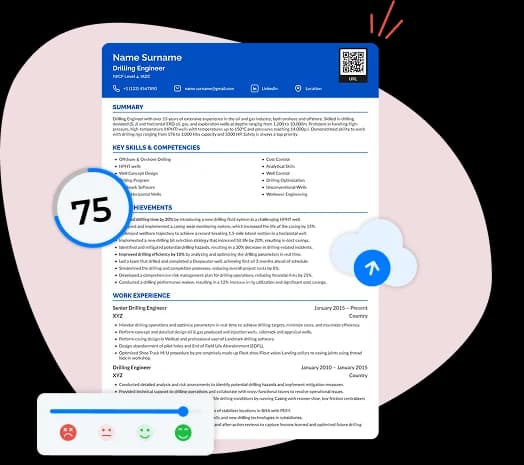
Our AI-Powered Resume Checker at engineernow.org analyzes your resume against data engineering standards.
With EngineerNow Resume scanner, you will get
✓ ATS Score & Analysis: See how your resume parses. We identify formatting issues, missing keywords, and weak sections that could get you filtered out.
✓ Tailored Feedback for Data Engineers: Get specific suggestions to improve your projects section, strengthen achievement bullets, and better match the job description. We go beyond basic spell-check.
✓ Competitiveness Benchmark: See how your resume length, word choice, and structure compare to successful candidates. Track your improvements over time.
✓ Privacy Assured: Your data is secure. We adhere to a strict privacy policy and don’t share your information.
Don’t guess. Know. Upload your resume for a free, in-depth analysis at:
Resume Scanner
AI scanner performs 15 essential checks to ensure your resume is optimized for the jobs you're applying to.
SCAN RESUMEQuick Answers to Your Resume FAQs
What if I have zero professional tech experience?
Skip the experience section entirely and lead with Projects and Education.
Seriously. A strong academic capstone or personal project is worth more than listing summer jobs that have nothing to do with data engineering. Your resume should highlight relevant skills and demonstrate your ability to build data solutions—even if that experience came from coursework rather than paid work.
Should I include references?
No. Not on your resume.
“References available upon request” is outdated filler from the 1990s. When recruiters want references, they'll ask for them (usually after interviews). Save that space for showcasing your technical skills and accomplishments that actually matter.
What about hobbies or interests?
Only if they're relevant or genuinely interesting.
Here's the test:
● ❌ “Reading, hiking, traveling” → skip it (generic filler)
● ✅ “Kaggle competitions, open-source contributor” → relevant, include it
● ✅ “Competitive chess (state champion)” → shows discipline, include it
● ✅ “Maintain homelab with self-hosted data tools” → extremely relevant, definitely include it
The question to ask: Does this hobby demonstrate skills, knowledge, or traits that make you a better data engineer? If yes, mention it. If it's just filling space, cut it.
What about a photo?
No photo (unless you're applying in Europe, where it's standard).
In the US and most tech roles, including a headshot is unnecessary and unprofessional. Companies want to focus on your qualifications and technical expertise, not your appearance. Save photos for your LinkedIn profile.
Do I need a cover letter?
Depends on the application system.
If the job application has a cover letter field or specifically asks for one → yes, write one.
Keep it focused: 3 short paragraphs, maximum 250 words.
● Paragraph 1: Why this specific company and role
● Paragraph 2: One project that demonstrates your ability to deliver results
● Paragraph 3: What you're eager to learn and contribute
If there's no cover letter field and the job description doesn't mention it → skip it and invest that time in tailoring your resume to highlight the most relevant skills for the role.
Need help writing an effective cover letter? Read Engineering Cover Letter Examples: Complete Guide for 2025!
How often should I update my resume?
Every time you finish a project or internship.
Don't wait until you're actively applying for jobs. Update it immediately while the details are fresh in your memory:
● What tools and technologies did you use?
● What was the scale? (data volume, processing speed, number of records)
● What improved? (efficiency gains, reduced errors, faster response times)
● What impact did your work have on the team or project?
Future you will thank present you for documenting these accomplishments when the details are still clear. It's much harder to recall specific metrics and technologies six months later when you're trying to apply for roles.
PDF or Word doc?
PDF. Unless—and this is important—the job application explicitly says “upload as .docx” or “Word format only.” In that case, follow instructions.
Why PDF?
- Your formatting stays intact across devices
- Looks professional
- Can't be accidentally edited
Works with ATS just fine (modern systems handle PDFs perfectly)
What Can You Lie About in a Resume?
You should always be honest. But there are a few gray areas where smart positioning (not fabrication) is acceptable. Watch this short video to see exactly what those are.

Written by
Recent Posts

Pub: 13 Feb 2026 - Upd: 01 May 2026
7 min. read
How to Succeed in Any Job Interview | My 10 Golden Rules
Pub: 12 Oct 2025 - Upd: 01 May 2026
27 min. read
Structural Engineering Resume Examples: Complete Guide for 2026