

Published · 12 min. read
Nuclear Engineer Resume: Samples, Skills, and Writing Guide


Creating a strong nuclear engineer resume is essential if you want to secure top jobs in this highly specialized engineering field. The nuclear industry demands technical skills, safety expertise, and a great understanding of regulatory policies. In this comprehensive guide, you will learn how to write an effective resume for nuclear engineer positions, what skills and experience are most important, and view real-world resume examples. We'll also discuss how to tailor your resume content for both applicant tracking systems (ATS) and busy employers, helping your application stand out.
With 17+ years of hands-on experience in the oil and gas industry, I understand the importance of structuring a resume that clearly highlights relevant expertise. Having worked in extreme environments from -50°C to +50°C, including offshore and desert conditions, I know how to present technical skills and achievements in a way that speaks directly to demanding engineering roles.
Resume Structure and Essential Sections
A professional nuclear engineer resume must contain specific sections to ensure clarity and completeness. Standard sections are contact information, a summary or objective, skills section, work experience, education, certifications, and relevant projects or publications. Organize your resume to be ATS-compatible by using clear section headings and bullet points. Doing this helps both recruiters and resume builders scan your qualifications quickly.
Writing a Professional Summary or Objective
Your resume summary or objective is the first section recruiters view. This is your chance to demonstrate your engineering expertise and nuclear-specific knowledge right up front. In 2–4 sentences, highlight your years of experience, technical skills, and project successes related to nuclear systems, compliance, or reactor design. For example, an entry-level applicant can use an objective to show their passion and skills, while a senior engineer should focus on established achievements within the nuclear industry.
Highlighting Work Experience with Accomplishments
For every job listed, use concise bullet points to outline your responsibilities and measurable results. Use action words and include data wherever possible. For example: “Led a team to implement advanced reactor safety protocols, resulting in a 12% reduction in operational incidents.” Show how your skills and experience have contributed to plant performance, regulatory compliance, or project management success. Ensure your experience section matches keywords from the job description for each engineer position you apply to.
Having conducted over 200 technical interviews as an interviewer and passed more than 50 technical and managerial interviews myself, I have a deep insight into what hiring managers look for. This experience guides me in showing how to turn engineering duties into measurable results that clearly demonstrate value to employers.
Education and Certifications to Include
Education is vital for nuclear engineers. List your highest degree first, including university, graduation year, and specific field of study like nuclear engineering or mechanical engineering. Add certifications such as Professional Engineer (PE), Health Physics Certification, or licensure from the Nuclear Regulatory Commission. These increase your resume’s value and show compliance with industry requirements.
Incorporating Technical and Soft Skills
A great nuclear engineer resume blends technical skills—like reactor modeling, simulation, safety analysis, or nuclear regulatory practices—with soft skills such as communication, teamwork, problem-solving, and project management. Your skills section should be tailored to the position and use industry terms relevant to nuclear operations and engineering.
Tailoring and Formatting Tips for ATS Compatibility
Nuclear industry recruiters use ATS to filter candidates. Align your skill set and experience to the exact requirements found in job descriptions. Use standard headings, avoid fancy fonts or embedded graphics, and choose a simple format. Save your resume as a PDF or .docx file to maintain formatting. Add LinkedIn and professional email for easy contact, helping employers or recruiters reach out directly. Use EngineerNow Resume Builder and Resume Scanner Tool:
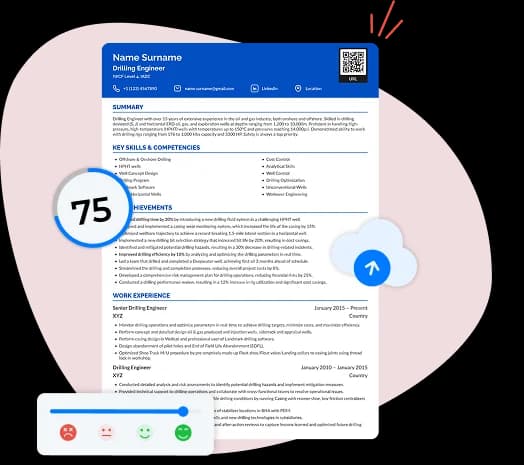
Resume Scanner
AI scanner performs 15 essential checks to ensure your resume is optimized for the jobs you're applying to.
SCAN RESUMEKey Skills and Qualifications for Nuclear Engineers
Technical Skills: Reactor Design, Safety Protocols, Simulation Tools
Success in the nuclear energy sector depends on advanced technical skills. Showcase proficiency in:
- Reactor core design and maintenance
- Nuclear safety protocols and risk assessment
- Simulation software—such as MCNP, SCALE, or advanced modeling systems
- Radiation measurement, plant operations, and analytical data processing
These technical abilities allow you to solve complex problems, improve reactor performance, and support compliance with safety standards.
Technical skills to use in the Resume:
- Nuclear Physics
- Radioactive Waste Disposal
- Nuclear Fuel Recycling
- Neutronic Analysis
- Radioisotope Production
- Reactor Systems Concept
- Advanced Reactor Designs
- Nuclear Weapon Design
- Nuclear Materials
- Radiation Protection
- Radiation Measurement
- Reactor Cores Design
- Nuclear Batteries
- Radiation Shielding
- Nuclear Energy Systems
- Power Plants Design
- Thermonuclear Analysis
- Model Simulations
- Develop Nuclear Hardware & Software
- Nuclear Facilities Design
- Nuclear Facilities Construction
- Nuclear Facilities Operation
- Nuclear Facilities Maintenance
- Nuclear Fission Reactors
- Thermal-Hydraulics
- Safety Analysis, Risk Assessment (PSA)
- Radioprotection
- Fuel Behavior & Design
- Reactor Components Engineering
- Reactor Control Systems
- Safeguard Engineering
- Economy of Plants
- Nuclear Medicine
- Medical Physics
- Radiation Therapy
- Health Physics
- Diagnostic Imaging
- X-ray Machines Design
- Magnetic Resonance Imaging (MRI)
- Nuclear Magnetic Resonance (NMR)
- Positron Emission Tomography (PET)
- PET Scanners
- Medical Scintillography Techniques
- Radiopharmaceutical
- Neuroimaging
- HAZOP/HAZID
- Chemical Engineering
- RELAP5-3D
- PyNE
- PALADON
- ORTRAN
- PDQ
- LATTIC
- RELAP
- RETRAN
- Geant4
- MCCARD
- MCNP
- OpenMC
- PHITS
- SCALE KENO
- Serpent
- TRIPOLI-4
- ACAB code
- ORIP_XXI code
- ORILL Code
- FISPACT-II
- MURE
- VESTA
- CASMO5
- HELIOS-2
- SCALE
- MPACT
- THOR
- nTRACER
- SIMULATE5
- PARCS
- SIMULATE-3K
- NESTLE
- Citation
- ATHLET
- TRACE
- GOTHIC
- FLICA-4
- RETRAN
- VIPRE-01
- PROTO-FLO
- PROTO-HX
- PROTO-HVAC
- PROTO-Sprinkler
- CFX
- FLUENT
- StarCD
- STAR-CCM+
- LOGOS
- COBRA-TF
- TransAT
- ATHLET-CD
- MELCOR
- MAAP
- MELCOR
- Python
- C++
- MATLAB
- AI
Soft Skills: Communication, Problem-Solving, Team Collaboration
Soft skills are just as important as technical expertise in nuclear engineering roles. Highlight your abilities in:
- Team collaboration within cross-functional engineering teams
- Communication with management, regulatory authorities, and operations staff
- Problem-solving in high-pressure plant environments
- Leadership and project management in multi-disciplinary teams
Employers value applicants who combine technical knowledge with interpersonal strengths.
Certifications and Licenses Relevant to Nuclear Engineering
Obtaining relevant certifications shows your commitment to development and compliance within the nuclear sector:
- Professional Engineer (PE) License
- Certified Nuclear Auditor
- Health Physics Certification
- NRC Operator License
Include these in a distinct section to increase the visibility of your specialized qualifications.
Industry-Specific Knowledge: Regulatory Compliance and Safety Standards
Regulatory knowledge is essential for nuclear engineers. Demonstrate your understanding of:
- NRC, DOE, and international nuclear safety regulations
- Environmental impact, waste management, and decommissioning processes
- Site-specific or company-specific policies for nuclear safety and reactor operation
Provide examples from your work that show compliance or help improve regulatory results.
For a practical walkthrough on creating impactful video resumes that can differentiate you in competitive engineering markets, watch: Engineering Video Resume: How to Stand Out From 90% of Engineers in 2026:
Project Management and Leadership Abilities
Project management skills are highly sought after in nuclear engineer roles. Highlight accomplishments that show you can:
- Lead engineering teams and manage large-scale plant projects
- Deliver on-time results within complex, regulated environments
- Oversee maintenance, modifications, and continuous improvement programs
Include quantifiable metrics for every leadership or project management achievement.
Enhancing Your Nuclear Engineer Resume
Using Quantifiable Achievements and Metrics
Transform your duties into results by including quantifiable achievements. For example:
- “Implemented a new simulation, improving reactor efficiency by 14%”
- “Reduced downtime across nuclear plant systems by 18% through preventive maintenance solutions”
Numbers add impact and show recruiters how your skills lead to measurable improvements for the business.
Avoiding Common Resume Pitfalls and Bad Grammar
Mistakes can cost you an interview. Always proofread to avoid grammar errors. Use correct spelling for all technical software, regulatory terms, and nuclear systems. Employers in the nuclear field expect attention to detail and accuracy—incomplete or poorly written content signals risk.
Explaining Employment Gaps Professionally
If your career history shows gaps, address them simply in your summary or as a brief line within your experience section. For example: “Took time for industry-specific training and research between 2024-2025.” This approach demonstrates transparency and continued commitment to professional growth without weakening your application.
To complement the professional examples provided, gaining insights on how to handle job search strategies abroad can be valuable. How I Found My FIRST Job as an Engineer Abroad?
Adding Unique Sections: Projects, Volunteer Work, and Publications
Enhance your resume by including:
- Relevant nuclear engineering projects
- Research publications or technical articles
- Professional affiliations and industry memberships
- Volunteer work in engineering outreach or STEM events
These sections provide extra value and demonstrate a well-rounded professional record, helping you stand out to recruiters and companies.
Nuclear Engineer Resume Templates
Below are three ATS-friendly nuclear engineer resume samples covering entry-level, mid-career, and experienced candidates. Review each example to see how the best resumes showcase technical, management, and nuclear safety skills.
Senior Nuclear Engineer
Entry-Level Nuclear Engineer Resume
Mid-Career Nuclear Engineer Resume
Conclusion
The best nuclear engineer resume combines technical skill with quantifiable impact and a clear, ATS-friendly format. Make sure your content is tailored to the specific job requirements and highlights both nuclear engineering expertise and the right mix of project management and team leadership. By following these proven strategies and reviewing the detailed examples above, you can build your resume to support long-term career success in the nuclear energy field.
FAQ / Q&A
What are the most important skills for a nuclear engineer resume?
Top skills include reactor and plant operations, safety analysis, project management, simulation software proficiency, compliance with nuclear regulatory standards, and strong problem-solving.
How do I tailor my resume for ATS compatibility?
Use standard resume sections, include keywords from the job description, and ensure formatting works for resume builders and applicant tracking systems. Save your file as PDF or DOCX.
How should I explain gaps in employment on my resume
Briefly mention upskilling, training, or relevant volunteer experience during employment gaps either in your summary or as a short note in your experience section.
What certifications are most valuable to include?
The most valuable are Professional Engineer (PE) license, NRC reactor licenses, Certified Nuclear Auditor, and Health Physics certifications.
How can I highlight leadership in a nuclear engineering role?
Showcase team or project management responsibilities, quantified mentorship or training achievements, and leadership in plant improvement initiatives.
What are common mistakes to avoid on a nuclear engineer resume?
Avoid grammar mistakes, lack of quantifiable achievements, omitting contact details, not tailoring resumes to job descriptions, or missing regulatory/compliance keywords.
How detailed should technical skills be on the resume?
Be specific with software, modeling, and reactor technologies used. List both advanced and fundamental technical skills related to nuclear and mechanical engineering.
Should I include volunteer work and publications?
Yes. Volunteer work demonstrates community engagement and teamwork; publications add authority to your technical expertise, strengthening your resume for nuclear jobs.
For additional tips on making your engineering resume stand out to ATS systems and recruiters, especially in technical fields, consider this resource: Resume tips for engineers (with real examples)!

Written by
Recent Posts