

59 min. read
Senior Data Engineer Resume Examples: Your Complete Guide to Landing Top Roles in 2026
At EngineerNow, we’ve helped hundreds of engineers land roles in data engineering and other engineering fields by building resumes that actually get noticed. In this guide, you’ll see complete senior data engineer résumé examples and learn practical tactics for shaping your career background — from highlighting technical depth to showing measurable business impact. Whether you're working on transitioning to a senior role or looking to enhance your current profile, this guide provides the detailed steps you need for success.
Ready to build a resume that actually stands out — but don’t want to waste time fighting with formatting?
We get it. Most senior engineers spend more time adjusting margins than writing achievements.
That’s why we built the Resume Builder at Engineernow.org specifically for engineers. It gives you ATS-ready templates, clean structure, and senior-level bullet point suggestions so you can focus on showcasing your technical depth, leadership experience, and business impact — not on layout headaches.


But even the best template won’t help unless you know what to put into it.
So before you jump in, let’s break down what actually makes a senior data engineer resume effective. Think of this as your page-by-page roadmap to crafting a resume that gets interviews, not rejections.
Introduction
As a senior data engineer, you know how important your role is for every modern company. You’ve built platforms that process terabytes of data daily. You’ve mentored junior engineers, optimized pipelines, and saved your company serious money on cloud costs. But when it’s time to put all that into a two-page data engineer resume, it’s easy to get stuck. We get it — we’ve seen this challenge again and again.
That’s why this guide cuts through the noise. You’ll find:
● What makes an ideal senior data engineer resume in 2026, including layout, format, keywords, measurable achievements.
● How to frame your platform architecture and streaming experience for maximum impact
● The metrics and keywords hiring managers actually care about
● Ways to show leadership without needing a “manager” title
● ATS optimization that keeps your engineering resume readable
● And, of course, senior data engineer resume examples across various specializations
Whether you’re advancing from a mid-level position or seeking to speed up your career at a new company, you’ll find practical insights and inspiration here to help you craft a resume that gets you interviews, not rejections. According to our data from hundreds of successful placements, candidates who follow these steps increase their chances of landing interviews by over 60%.
Senior Data Engineer Resume Example #1: Platform Architecture Focus
John Brightman
Senior Data Engineer — Platform Architect
- john-bright@mail.com
- LinkedIn.com/in/johnbright | GitHub.com/joebri
- Bellevue, WA
SUMMARY
Senior data engineer with over 8 years of experience architecting and optimizing large-scale data platforms that process more than 350 million events daily. Expert in building end-to-end data pipelines, implementing lakehouse architectures, and driving over $1.2 million in annual cost savings through performance optimization. Led cross-functional teams and delivered data solutions that enable real-time analytics and strategic decision-making across Tier 1 organizations. Deep background in Spark, Kafka, and AWS. Committed to fostering innovation and helping teams scale successfully.
HARD SKILLS
● Data Platforms & Architecture: Lakehouse, Data Mesh, Platform Engineering, Data Warehousing
● Big Data: Apache Spark, Kafka, Flink, Hadoop, MapReduce, Hive
● Cloud Platforms: AWS (S3, EMR, Redshift, Glue, Athena, Lambda), GCP (BigQuery, Dataflow)
● Databases: PostgreSQL, MongoDB, Cassandra, DynamoDB, Oracle, Snowflake
● Orchestration: Apache Airflow, Luigi, AWS Step Functions, Jenkins CI/CD
● Programming: Scala, Java, SQL, PL / pgSQL
● Protocols and Data Formats: Parquet, Avro, JSON, XML, Arrow
● Leadership & Collaboration: Technical Mentorship, Cross-functional Team Leadership, Agile/Scrum
EXPERIENCE
TECH INC. | Senior Data Engineer
Seattle, WA | March 2020 — Present
● Architected and implemented a unified lakehouse platform that processes over 350 million events daily. This reduced query latency by 61% and enabled real-time analytics for over 90 data scientists and analysts.
● Led the migration from an on-premises Hadoop cluster to cloud-based AWS infrastructure (S3, EMR, and Redshift). Result: $1.33 million in annual cost savings and 99.87% uptime.
● Designed and built streaming data pipelines using Kafka and Spark Streaming to process transaction data in real time and support fraud detection systems that analyze over 2.3 TB daily.
● Spearheaded the implementation of a data governance framework that ensured GDPR compliance and established data quality standards adopted across the engineering organization.
● Mentored a team of five junior and mid-level data engineers, conducted code reviews, led technical design sessions, and fostered a culture of continuous learning.
● Optimized Spark job performance through partitioning strategies and caching mechanisms, improving processing speed by 60% and reducing infrastructure costs by 32%.
● Collaborated with product managers and business stakeholders to translate requirements into scalable technical solutions and delivered 15+ high-impact data projects.
GLOB RETAIL | Data Engineer
Portland, OR | June 2017–February 2020
● Developed ETL (Extract, Transform, Load) pipelines that processed customer behavior data from multiple sources (web, mobile, and in-store), enabling personalized marketing campaigns that increased the conversion rate by 18%.
● Built an automated data quality monitoring system using custom Python scripts and Airflow to catch data integrity issues before they impacted downstream analytics.
● Migrated a legacy Oracle data warehouse to the Snowflake cloud platform, improving query performance by four times and reducing operational costs by 40%.
● Created a comprehensive data documentation and best practices guide that was adopted as the standard by the data engineering team of 23 engineers.
E-COMMERCE STARTUP | Junior Data Engineer
San Francisco, CA | January 2016–May 2017
● Designed and maintained MySQL databases for an e-commerce platform, that handled over 110,000 daily transactions.
● Built Python-based ETL scripts that extracted data from REST APIs, transformed business logic, and loaded it into a PostgreSQL data warehouse.
● Developed SQL queries and reports for the business intelligence team, providing them with actionable insights.
EDUCATION
Bachelor in Computer Science
University of Washington, Seattle, WA
● Graduated: May 2015
● Coursework: Database Systems, Distributed Computing, Algorithms, Machine Learning
CERTIFICATIONS
● AWS Certified Big Data Specialty
● Google Cloud Professional Data Engineer
Why This Resume Works
This senior data engineer’s resume has several features that consistently catch the attention of ATS systems and technical hiring teams. Here’s what makes it effective and sets it apart from other candidates:
Value and Scale
Every achievement comes with numbers: how many daily events were handled, how much money was saved, and how system latency was reduced. Metrics like these signal senior-level scope and show the scale of experience. Hiring managers don't have to guess whether a candidate can work at scale — it's obvious. This level of detail helps recruiters quickly identify top talent and increases your chances of being considered for the role.
Leadership without a Management Title
You don't need “Manager” on your business card to demonstrate leadership. Phrases such as “mentored five engineers,” “spearheaded implementation,” and “led migration” make it clear that this person drives initiatives and elevates the team. This is exactly the kind of technical leadership that companies expect from senior engineers. Candidates who successfully demonstrate mentoring and fostering team growth are 3x more likely to receive interview requests.
Architecture mindset
This senior data engineer resume isn’t just about pipelines. It’s also about platform ownership: architecting a unified lakehouse, designing streaming architecture, and implementing a governance framework. This systems-level thinking is what separates senior engineers from mid-level contributors who only execute tickets. Understanding these concepts and being able to provide extensive technical prowess is critical for senior roles.
Business Context
The technical work is tied directly to outcomes. Instead of simply stating “built Kafka pipelines,” the resume connects the work with real impact, like “enabled fraud detection” or “powered real-time inventory.” This translation of engineering efforts into business value is what makes a resume resonate with decision-makers and helps bring your profile to the top of the candidate list.
Stop Starting From Scratch: Use Our Senior Data Engineer Resume Templates
Let's be honest—writing an engineering resume at the senior level is difficult. You’ve built platforms that process terabytes per day, architected streaming systems, and led technical initiatives. But boiling all that down into two pages that won't get chewed up by an ATS filter? That’s where most engineers hit the wall.
That’s why we created the EngineerNow Resume Builder. It's not just another generic template pack; it's specifically designed for engineers. The ATS-friendly layouts are still readable for humans. The structure highlights what matters most: technical depth, leadership, and business impact.
Here’s what you get:
● ATS-optimized templates that pass automated screening while remaining visually appealing to human reviewers
● Smart AI suggestions that help quantify achievements and strengthen action verbs based on your experience level
● Role-specific sections for technical skills, certifications, open source contributions, and publications
● Easy customization for tailoring resumes to specific job descriptions without starting over
We’ve backed in lessons from hundreds of successful applications, so you won't have to reinvent the wheel. Whether your specialty is platform architecture, streaming, or cloud migration, the templates provide a framework to showcase your expertise in the best way possible.
Head over to engineernow.org/resume-builder and get your resume tune up in minutes, not hours. You can download the resume in PDF or other document format (.doc, .docx, .rtf).
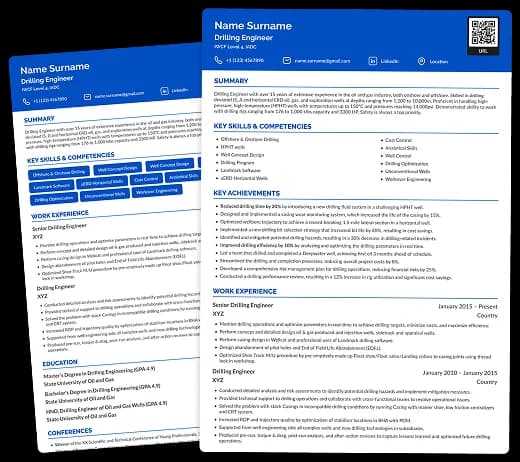
Resume Builder
Use proven engineering templates to build a job-winning resume in minutes.
CREATE RESUMESenior Data Engineer Resume Example #2: Real-Time & Streaming Focus
Nagel Weaver
Senior Data Engineer — Streaming & Real-Time Systems Specialist
New York, NY | nagelw-data@email.com | (555) 123-4567 | LinkedIn: /in/nagelweaeng
SUMMARY
Senior Data Engineer with specialization in real-time data processing and event-driven architectures. More than 7 years of experience building high-performance streaming pipelines that process billions of events monthly using Kafka, Flink, and Spark Streaming. An expert in designing low-latency systems that support mission-critical applications with 99.99% uptime. Ability to optimize data infrastructure, reduce operational costs by 45%, and enable data-driven insights that drive strategic business decisions in financial services and e-commerce.
Hard Skills and Core Competencies
● Streaming Technologies: Apache Kafka, Apache Flink, Spark Streaming, AWS Kinesis, Azure Event Hubs
● Data Processing: Real-time ETL, Stream Processing, Event-Driven Architecture, CDC (Change Data Capture)
● Cloud Infrastructure: AWS (Kinesis, Lambda, DynamoDB, RDS), GCP (Pub/Sub, Dataflow), Azure
● Databases & Storage: Cassandra, MongoDB, PostgreSQL, Redis, Elasticsearch, S3, HDFS
● Monitoring & Observability: Prometheus, Grafana, CloudWatch, ELK Stack, DataDog
● Programming: Python, Java, Scala, SQL, Bash scripting
● Message Formats: Avro, Protobuf, JSON, Parquet
● DevOps: Docker, Kubernetes, Terraform, CI/CD (Jenkins, GitLab), Infrastructure as Code
PROFESSIONAL EXPERIENCE
FINTECH GLOBAL CORP. | Senior Data Engineer
New York, NY | April 2021 — Present
● Designed and deployed event-driven data platform processing 3 billion financial transactions monthly with sub-second latency, enabling real-time fraud detection and risk assessment
● Architected Kafka-based streaming infrastructure across multi-region AWS deployment, achieving 99.99% availability and handling peak loads of 1M+ events per minute
● Implemented Flink applications for complex event processing and aggregation, replacing legacy batch systems and reducing time-to-insight from 24 hours to under 1 minute
● Led initiative to migrate monolithic data pipelines to microservices architecture using containerization (Docker/Kubernetes), improving deployment speed by 80% and system resilience
● Optimized data serialization strategy switching from JSON to Avro, reducing message size by 60% and cutting network bandwidth costs by $400K annually
● Collaborated with machine learning team to build feature store enabling real-time model inference, supporting predictive analytics for 5M+ customer accounts
● Mentored 3 data engineers on streaming best practices, conducting workshops on Kafka internals, exactly-once semantics, and backpressure handling
● Established monitoring and alerting framework using Prometheus and Grafana, reducing mean time to detection (MTTD) for production issues from hours to minutes
E-COMMERCE Corp. | Data Engineer
Lynn, MA | July 2018–March 2021
● Built real-time recommendation engine pipeline ingesting user clickstream data via Kafka, processing with Spark Streaming, and serving personalized product suggestions increasing revenue by 22%
● Developed CDC solution using Debezium and Kafka Connect to capture database changes in real-time, synchronizing data across PostgreSQL, MongoDB, and Elasticsearch within seconds
● Created automated data quality checks integrated into streaming pipelines, preventing corrupted data from reaching downstream systems and saving 40+ hours monthly in manual validation
● Implemented dead letter queue pattern for handling pipeline failures gracefully, improving system reliability and reducing data loss incidents by 95%
● Optimized Kafka cluster configuration (partitioning strategy, replication factor, retention policies) improving throughput by 50% while maintaining consumer lag under 10 seconds
● Designed real-time dashboard tracking key business metrics (sales, inventory, user engagement) using Elasticsearch and Kibana, providing executives with instant visibility
HI-TECH Corp | Junior Data Engineer
Quincy, MA | June 2017–June 2018
● Developed batch ETL pipelines using Apache Spark and Python, processing daily data feeds from multiple third-party APIs
● Built SQL queries and stored procedures for reporting needs, supporting business intelligence and analytics teams
● Assisted in database optimization projects, creating indexes and query tuning to improve application performance
EDUCATION & CONTINUOUS LEARNING
Master in Computer Science
Massachusetts Institute of Technology (MIT), Cambridge, MA
- May 2017
- Focus: Distributed Systems and Database Technology
Bachelor of Science in Computer Engineering
University of California, Berkeley, CA | May 2015
Recent Professional Development:
● Confluent Certified Developer for Apache Kafka (2024)
● AWS Certified Solutions Architect — Professional (2023)
● Completed “Stream Processing with Apache Flink” (Coursera, 2024)
● Regular contributor to Apache Kafka community, authored 2 technical blog articles on streaming patterns
TECHNICAL PUBLICATIONS
● “Building Fault-Tolerant Streaming Pipelines: Patterns and Anti-Patterns” — Engineering Blog (2024)
● “Optimizing Kafka for Financial Services: A Case Study” — Data Engineering Conference (2023)
Senior Data Engineer vs. Data Engineer: Key Differences for Your Resume
It may seem obvious, yet my experience as both a career coach and someone involved in engineering hiring shows the same pattern over and over again: senior data engineers often position themselves like mid-level contributors by placing too much emphasis on their tech stack and not enough on their senior-level impact.
Before we dive into the practical tips, here’s a quick refresher on the key differences that will help you position yourself correctly and communicate your seniority with clarity.
Scope and Scale
A mid-level data engineer usually owns specific pipelines or components within a team. A senior engineer operates at the platform level — designing systems that support multiple teams, business units, or entire organizations. If a mid-level engineer optimizes a single ETL that processes a few gigabytes, a senior engineer designs streaming or batch infrastructure handling terabytes or petabytes daily.
On your resume, show impact that goes beyond “my team” and touches larger parts of the company.
Technical Depth and Architectural Thinking
Mid-level engineers implement. Senior engineers design and decide. A senior data engineer evaluates trade-offs, picks the right tooling, plans long-term architecture, and understands how today’s decisions scale a year from now.
Hiring managers want to see examples of architectural choices you have made — and why.
Leadership
You don’t need a manager title to showcase leadership. Senior engineers lead through:
- Mentorship: “Mentored 3 junior engineers, with 2 promoted within 18 months”
- Standards: “Established code review practices reducing production incidents by 60%”
- Influence: “Drove adoption of dbt across analytics org after building proof-of-concept”
Your resume should highlight moments where you influenced direction, guided others, or drove adoption of better processes — even if nobody officially reported to you.
Problem Complexity
Mid-level engineers focus on scoped technical tasks. Senior-level specialists tackle ambiguous, cross-cutting challenges: governance, platform modernization, disaster recovery, multi-cloud architecture, messy legacy migrations. To catch HR’s attention, show that you can deal with open-ended problems where nobody hands you a clear spec.
Business Acumen
Senior data engineers do more than build and maintain infrastructure; they solve business issues and understand the “Why does this matter to the business?”. Reduced query time by 80%? That's a good start, but did it enable faster decision-making? Save analyst time? Unlock a new product feature? Migrated to Snowflake? Great. What did that cost reduction enable the company to do? What new capabilities did it unlock?
Connect your technical work to business value. Demonstrate how you communicate with product and business stakeholders, prioritize based on impact, and present results in terms of cost savings, revenue opportunities, or operational efficiency. If you're not doing that throughout your resume, you're positioning yourself as mid-level data engineer.
Keep in mind. In the experience section, every bullet point should implicitly answer: “Why did this matter?”
How to Position Yourself as a Senior Data Engineer
Your professional summary should reflect architectural ownership and business impact. Your professional skills section should show depth and breadth — expertise and ecosystem awareness. And the experience should lead with impact, then explain how you achieved it.
Don't make hiring managers hunt for evidence of seniority. Put it right up front.
Quick Guide: What Hiring Managers Look For in a Senior Data Engineer Resume
Technical leadership & mentorship
Did you actually help juniors level up? Did you challenge outdated practices and modernize the team? Show it. Senior engineers are expected to lift the whole group, not just ship their own code.
Architectural impact
Can you design systems that won't crash when data volume doubles or triples? Demonstrate your ability to make real trade-off decisions, eliminate over-engineering, select sensible tools (not only the most popular), and take ownership of the outcomes.
Measurable business value
This is the biggest filter. If you simply write “built a pipeline” or “improved performance”, your resume will die. HR managers or directors want to see “cut query latency by 70%,” “saved $400K in cloud spend,” or “enabled the fraud team to catch $4M in bad transactions”.
Mastery of the ecosystem
Fluency in data engineering tech stack, and cloud platforms (AWS, GCP, Azure) is assumed for senior roles. What matters is showing you’ve worked across the full data lifecycle — ingestion, processing, storage, governance — and can adapt as the stack evolves.
Before you wrap up your application, remember this: your resume can showcase your accomplishments, but it can’t carry the whole story. A strong cover letter gives you the space to write about the why behind your work, highlight additional context, and address the key insights that don’t fit neatly into bullet points. It’s one of the most important tools to stand out—especially in a field as complex as data engineering, where your impact goes far beyond the raw metrics. If you want a clear, step-by-step guide on how to create a compelling letter that recruiters actually read, watch this short video:


Senior ML Data Engineer Resume Example #3
James R. Caldwell
Senior ML Data Engineer
Seattle, WA • james.caldwell@email.com • LinkedIn.com/in/jrcaldwell
Summary
Experienced Senior ML/ Data Engineer with 10 years building scalable data architectures, ML-ready datasets, and automation pipelines for large enterprise environments. Strong expertise in data modeling, data mining, data science, and data analytics, with a proven track record of designing and implementing robust data systems, optimizing response times, and enabling analytics teams to deliver high-impact models. Adept at communication, problem-solving, and coordinating cross-functional teams to ensure data accuracy, privacy, and end-to-end workflow quality.
Professional Experience
Senior ML Data Engineer — Amazon Web Services (AWS)
Seattle, WA • 2021–Present
● Designed and implemented ML-ready data architectures supporting large-scale data warehouses, NoSQL stores, and real-time data ingestion from diverse data sources, using Amazon S3, DynamoDB, EMR, and Kafka.
● Implemented data integration workflows using NiFi and custom API apps to automate data ingestion, streamline data pipelines, and ensure data quality across environments.
● Performed data mining, complex data analysis, and modeling to support data science teams, resulting in 30% faster response times for production models.
● Maintained high accuracy and reliability of ML feature tables, managing metadata, testing, security policies, and ensuring compliance with privacy and access standards.
● Collaborated closely with developers, software engineers, and analysts to translate business requirements into scalable solutions using PySpark, Python, SQL, and MS Server.
● Led automation efforts that reduced downtime and manual operations by 45%, streamline data workflows, and improve overall delivery for clients and internal users.
ML Data Engineer — Meta (Facebook)
Menlo Park, CA • 2018–2021
● Developing and maintaining ML feature stores and data models powering ranking and relevance models used across high-traffic apps.
● Built data ingestion pipelines using Airflow, PySpark, and Kafka, analyzing large datasets from data logs, market trends, and user behavior.
● Created efficient Tableau dashboards and automated report generation to support product, policy, and security operations teams.
● Managed cross-team projects, coordinated staff, and supported analysts through training, documentation, and knowledge sharing.
Data Engineer — Microsoft
Redmond, WA • 2016–2018
● Used Python, SQL, and Scala to build ETL pipelines and perform analysis on enterprise datasets.
● Streamline data workflows by integrating data systems with Power BI, Excel, and internal tools.
● Performed data quality checks and maintenance, reducing errors by 60% and improving integration between platforms.
Technical Skills
● Data Platform: Kafka, Airflow, NiFi; AWS (S3, EMR, Lambda), Azure; Snowflake;
● Data Base and Data Engineering Tools: NoSQL; Terraform; Git; Tableau; API development;
● Programming languages for data engineering role: Python (PySpark), SQL, Scala;
● Data Processing skills: performance tuning; data management; data architecture; data security; automate data workflows.
Education
University of Washington, B.S. in Computer Science
Additional academic training in ML, data mining, and advanced analytics.
How to Write a Senior Data Engineer Resume That Gets Interviews
Okay, you know what hiring managers are seeking on your resume. For a senior-level data engineer candidate, they want to see technical depth, leadership, and value for business. The question is: how do you actually show it on paper?
Here’s how to write your data engineer resume that signals senior‑level experience instead of mid‑level execution.
Right Format & Structure
Keep the senior data engineer resume in reverse-chronological format — your latest role goes first. For senior positions, hiring teams want to understand your current technical scope, leadership responsibilities, and business influence as quickly as possible.
Pro tip: If you’ve gone deep into a specific stack or delivered standout results with certain tools, you can use a hybrid format: keep the chronological backbone, but add achievements or link to flagship projects near 2-3 core skills.
A strong senior data engineer resume follows a predictable structure that both ATS systems and technical hiring teams can parse easily. The essential sections include:
1. Contact info — Full Name (no nicknames), “Senior Data Engineer”, city/state, phone, email, LinkedIn (and GitHub if it’s not empty).
2. Summary — 3–4 lines capturing your career arc, technical strengths, and measurable impact.
3. Skills — 20–25 max. Focus on the stack that matters for senior roles.
4. Work experience — the core section of the resume. Most recent first, each role with 3–5 bullets showing scope, achievements, and metrics (fewer for older roles).
5. Education — degree, major, university or engineering school, graduation year. That’s it.
6. Projects (optional) — highlight standout work, open source, or side projects.
7. Certifications — only advanced and recent ones (cloud, ML, architecture).
8. Languages (optional).
9. Extras (optional) — patents, publications, conference talks.
Length matters. One to two pages, max. The senior data engineer resume is about depth, not verbosity. Show scale, impact, and leadership — cut the fluff.
Need more detail on structuring each section? We've got a complete breakdown of data engineer resume structure that walks through every section with examples. For this guide, we're focusing on what changes at the senior level.
Professional Summary for Senior Level
Summary is the first thing a hiring manager reads, scanning your resume. If it’s generic, your resume dies in 5 seconds. If it hits hard, they’ll actually read the rest. So, in a few sentences, you need to summarize years of experience, technical focus, and scale of impact. This is not the place for generic lines like “hardworking engineer seeking new opportunities” — hiring teams see dozens of those every day.
❌ Weak example (have seen 1,000 times this month):
“Experienced data engineer seeking senior role. Skilled in various Big Data technologies, including Spark, Hadoop, and cloud platforms. Team player with strong programming skills. Seeking a position at an innovative company.”
✅ Resume example that gets more attention:
“Senior Data Engineer with 9+ years designing and delivering data platforms that process 8–15 TB daily in fintech and healthcare. Deep expertise in fault-tolerant streaming (Kafka, Flink) and cloud-native architectures (AWS, GCP, Snowflake), consistently reduced annual cloud spend by $1.5M–$3M and hit 99.99% uptime. Mentored junior engineers to mid-level, defining org-wide data standards, and partnering with execs to turn technical wins into revenue and risk reduction.”
The difference is obvious: the strong version uses real metrics, highlights industry context, shows leadership, and demonstrates your business awareness — all of which hiring managers expect at the senior level.
How to Structure a Strong Summary?
Here is the universal formula:
Your Job Title + Years of Experience + Industries/Context + Key Technical Stack + Quantified Impact + Leadership/Soft Skills.
Use this formula as a checklist:
1. Start with your current role.
2. Add your years of experience and industry context, if it’s relevant.
3. Name your technical focus—platform architecture, streaming infrastructure, ML pipelines, whatever you're known for.
4. Include your most significant 2–3 achievements with numbers that show scale or impact.
5. Mention leadership related to the senior level.
But here's the thing: this shouldn't read like you filled in a Mad Libs template. The formula is a checklist, not a script.
Tailor your resume summary for ATS without sounding like a robot
The summary is the ideal place to integrate keywords like “senior data engineer,” “data pipelines,” “ETL,” “real-time processing”, and specific tools from the job listing.
But you need to integrate keywords naturally; ATS systems care about context. A clean, readable sentence with relevant phrasing is far more effective than a cluttered block of buzzwords. Phrases like “Architecting real-time ETL pipelines on AWS” cover multiple keywords while actually saying something meaningful.
Showcasing Strategic Value: Senior-level summaries must convey strategic thinking. Use language that signals this:
● “Architected platform-level solutions” (not “built pipelines”)
● “Established organizational standards” (not “followed best practices”)
● “Drove technical strategy” (not “worked on technical projects”)
● “Enabled business transformation” (not “improved systems”)
These signal you operate at a higher level than individual contributors focused solely on implementation.
Checklist before you hit save:
✓ Specific volume or $ numbers?
✓ Leadership or mentorship mentioned?
✓ Flagship technologies named?
✓ Sounds like a human wrote it, not ChatGPT?
✓ Reads naturally when said out loud?
Write it last, after the rest of your resume is done. Pull the strongest metrics straight from your experience bullets — that’s how it stays honest and punchy.
Do this right, and the reader is already thinking “I need to talk to this person” before they even scroll down.
Quantifying Your Impact at Scale
At the senior level, nobody cares that you “built pipelines” or “worked with Spark.” They care about three things: how big, how fast, and how much money (or headache) you moved. And the only way to show that on a data engineer resume is with measurable results.
Every strong bullet follows the same unspoken pattern:
Scale → Technology → Business Outcome
✓ Scale — How big was it? Data volume, throughput, latency, number of users, number of regions, and team size.
✓ Technology — How did you solve it? Tools, platforms, architectural decisions.
✓ Outcome — Why does it matter? Cost savings, revenue impact, efficiency gains, reduced risk, and new capabilities.
That’s it. If your bullet is missing any of these three, rewrite it.
Strong experience bullet example:
“Migrated 50 TB Oracle warehouse to Snowflake, cut infra costs by $800K annually, and improved query speed 10x for 200+ analysts.”
This formula works across different achievement types:
✓ Volume metrics: “Architected system processing 500M events daily…”
✓ Performance gains: “Optimized Spark jobs, reducing execution time by 75%…”
✓ Cost savings: “Re‑architected AWS infra with spot instances, saving $150K/month…”
✓ Team impact: “Mentored 7 engineers, 4 promoted to senior within 18 months…”
✓ Business enablement: “Built fraud detection pipeline preventing $2M in losses annually…”
✓ Reliability: “Designed DR solution hitting 99.99% uptime SLA…”
Real examples that consistently work:
Cost savings
● Cut annual cloud spend $1.7M by rightsizing EMR clusters, moving cold data to Glacier Deep Archive, and killing 200+ zombie Spark jobs nobody owned.
● Reduced Snowflake bill 48% ($1.1M/year) through clustering keys, materialized views, and warehouse auto-suspend — zero performance regression.
Performance & latency
● Dropped end-to-end latency from 12 hours to 22 minutes by replacing nightly batch jobs with Kafka + Flink streaming and RocksDB state backend.
● Slashed dashboard query time from 38 seconds to <3 seconds via Delta Lake Z-ordering, partition pruning, and query pushdown — increased the efficiency of 400 analysts
Scale & volume
● Architected lakehouse platform ingesting 2.8 PB/month across three regions with 99.99% uptime and sub-5-second consumer lag at peak.
● Scaled Kafka cluster to 1.4M messages/sec during peak trading hours while keeping p99 latency under 120ms.
Reliability & quality
● Reduced pipeline failures from ~15/month to one every four months with idempotent consumers, dead-letter queues, and Great Expectations checks.
● Implemented automated schema-evolution contracts that caught 100% of breaking changes before production (previously ~6 incidents per quarter).
Revenue or risk impact
● Delivered real-time feature pipeline that powered fraud models and blocked $5.3M in fraudulent transactions last year alone.
● Built customer-360 platform that let marketing increase campaign ROI 42% and added $18M incremental revenue (A/B tested).
Team & organizational wins
● Mentored 5 engineers → 4 promoted to senior and 1 to staff within 24 months.
● Wrote the internal data contracts + testing standards now used by every data team in the company (90+ engineers).
And if you don’t have exact numbers?
You can still show credible scale with ranges or directional statements — it still beats nothing:
● “Reduced query costs 40–55% depending on workload.”
● “Improved reporting cycles from hourly to near real-time.”
● “Supported global analytics for 30+ countries and 1,200+ concurrent users.”
Tips: A conservative estimate is always better than a vague statement.
Done right, your experience section reads like a highlight reel of business value instead of a to-do list. That’s the difference between “another resume” and “we’re calling this person today.”
Technical Skills Section (Spoiler: Less Is More)
The professional skills section has two purposes. It:
● Helps with ATS keyword matching and gets you past the ATS.
● Tells a hiring manager in a few seconds what you actually own.
Some seniors make the mistake dumping 40+ tools in one giant list. The result? This looks like a jack-of-all-trades and master of none. Simply listing every technology you've touched hides your real strengths.
The rule: keep the list focused, stick to the technologies you actually master and that matter for senior‑level data engineer. 15 core skills are a sweet spot; 20 to 25 only if you’re truly fluent, and they’re in the job description.
Organize, don’t alphabetize. Group hard skills into logical buckets so they’re easy to scan and highlight your specialties.
Example (I included most popular hard skills and tools for data engineer):
● Data Platform & Architecture: Data warehouse and Lakehouse, Data Mesh, Platform Engineering, Microservices
● Big Data Processing: Spark (PySpark, Scala), Hadoop, Presto, Hive
● Streaming & Real‑Time: Kafka, Flink, Spark Streaming, Kinesis, Pub/Sub
● Cloud: AWS (S3, EMR, Redshift, Glue, Athena, Lambda), Azure (Databricks, Synapse), GCP (BigQuery, Dataflow)
● Databases: PostgreSQL, MongoDB, Cassandra, DynamoDB, Snowflake
● Orchestration: Airflow, Luigi, Prefect
● Programming: Python, Scala, Java, SQL, Bash
● Data Engineering Tools: dbt, Great Expectations, Nifi
● DevOps & Infra: Docker, Kubernetes, Terraform, Jenkins, GitLab CI/CD
● Governance: Data Quality, Data management, Lineage, Privacy & Compliance, GDPR
When listing skills and tools, show depth, not just names. “Python” or “SQL” alone tell them nothing. Python (PySpark, Pandas, NumPy) or Advanced SQL (query optimization, window functions) shows you actually use it for data work, not just scripting.
Pro moves that separate seniors from the crowd:
● Put your absolute strongest 1–2 categories first (the ones the job description screams for).
● Add tiny achievements for your top 3–4 tools — instantly shows depth.
● Keep soft/leadership skills that show seniority (such as problem-solving, leadership, mentorship, strategical thinking), but park them in their own mini-category at the end — they’re expected at the senior level.
● Certifications? Either drop them here (AWS Solutions Architect – Professional, Confluent Certified Developer) or give them their own short section. Never bury them.
● Back up your skills and owned tools in the experience section. If you claim Spark expertise, you’d better have bullets showing you optimized Spark jobs and saved real money doing it.
Common mistakes to avoid
● Listing outdated tech you haven’t touched in years (unless they are directly relevant to the job).
● Pretending to be an expert in 50 tools — instant red flag that you don’t know what you’re actually good at. Depth in 5–7 core technologies beats surface knowledge of 50.
● Ignoring soft skills. Leadership, mentorship, and technical communication are legitimate senior‑level competencies.
● Forgetting certifications. AWS, GCP, Databricks, Snowflake certs deserve mention (either here or in a separate section)
Tailor for Each Application
Keep a master list of everything you know, but customize what shows up for each job — reorder the categories and emphasize the 4–6 skills that appear in the JD.
Applying to a streaming-heavy role? Put Kafka and Flink at the top of their categories. Cloud migration position? Lead with multi-cloud experience and specific services (EMR, Redshift, BigQuery).
It takes 90 seconds, doubles your ATS match rate, and still looks honest.
Do it this way, and the skills section stops being filler — it becomes a quick proof that you’re the real deal before they even reach your experience bullets.
Experience Section Architecture: How to Prove Your Senior Level
Your experience section is the core of your data engineering resume. And it’s the place where you need to prove you’re not just writing code, but driving impact. Everything else just gets you to this section.
At the senior level, this part of the data engineer resume has to do four things at once:
● Show real scale
● Prove technical depth
● Highlight leadership
● Deliver undeniable business results
How to do that and craft strong experience resume sections? First, use the right structure that ATS and HR managers expect.
Universal structure that works every time:
✓ Company • City • Title • Dates
✓ One-line impact summary (optional but gold):
“Led the build-out of a modern lakehouse platform that cut annual cloud spend $2.1 M and reduced time-to-insight from days to minutes while mentoring 7 engineers to senior level”.
✓ 4–6 bullets per recent role, 2–3 for older ones.
Second, describing experience section lead with impact. Don’t start with “responsible for pipelines.” Open each role with a high‑level impact statement that sets the tone.
Universal bullet formula for strong experience bullets
Strong verb + Scale/Context/Issue + Action/Technical approach + Business result
It’s a simple way to structure bullets without drowning in words:
● Strong verbs — show action taken
● Scale/Context/Issue: Briefly establish context (what problem needed solving or what opportunity existed)
● Action/Technical approach: What you specifically did, emphasizing your role and technical approach
● Business result: what changed and quantified business impact
Example:
“Facing daily pipeline failures causing delayed reporting [Context/Issue], designed a fault-tolerant architecture using Kafka and idempotent consumers [Action/Tech], reducing failure rate by 90% and ensuring on-time delivery for mission-critical business dashboards [Result].”
Leverage senior verbs to highlight your level and impact (leave the junior and middle ones in the past)
Mid-level engineers “built” and “worked on” things. Senior engineers shape direction.
✅ Use: Led • Architected • Drove • Established • Spearheaded • Designed • Transformed • Scaled • Championed • Owned • Pioneered
❌ Avoid mid-level and junior verbs: Built • Developed • Worked on • Helped • Participated • Responsible for
Same work; different positioning. The first version says you owned it.
Real Experience Bullet Samples for Data Engineer Resume
● Led migration of 180 TB legacy warehouse from Teradata to Snowflake, saving $2.8M/year and boosting query performance 12x for 1,200 concurrent analysts.
● Architected event-driven platform on Kafka + Flink processing 1.2M events/sec at peak, cutting fraud losses by $5.3M annually with sub-100ms latency.
● Drove adoption of dbt + Airflow standards across five teams, reducing pipeline development time 60% and production incidents 78%.
● Designed and rolled out self-service data platform that unblocked 40+ stalled ML projects and added $22M incremental revenue in 18 months.
● Mentored 6 engineers through senior promotion process (5 succeeded) and established the internal data engineering guild now 45 members strong.
● Owned technical roadmap for $15M analytics program, negotiated vendor contracts, and delivered three major releases 15–25% under budget.
What Projects to Include
For your career, you may work on dozens or even hundreds of projects. You don't need to list everything, of course. Focus on work that shows:
● Scale appropriate for senior level (TB/PB data volumes, organization-wide impact)
● Technical depth in areas relevant to where you're applying
● Measurable business value (cost, speed, revenue, capability)
● Leadership (mentoring, standards, cross-functional influence)
● Modern tech stack (what companies are hiring for today)
● Problem‑solving in ambiguous situations.
Stick to the last 3–5 years, unless older work is uniquely impressive.
Tip from HR:
Lead with business impact, then add technical detail. That way, both technical and non‑technical readers see your value.
Example:
“Reduced data processing costs 40% by optimizing Spark execution plans, adding dynamic partition pruning, and leveraging broadcast joins.”
Business impact first, technical chops second — that’s the formula that works.
Quick filter for every bullet
● Would a non-technical VP understand the value in 5 seconds?
● Does it show I made decisions, not just executed tickets?
● Is there a number ($, %, TB, users, latency, uptime)?
If “no” to any → rewrite.
Do this right and your experience section reads like a series of wins that mattered to the business, not a log of tasks you were assigned. That’s exactly what separates the senior resumes that get phone calls from the ones that don’t.
Senior Data Engineer Resume Example #4: Cloud Migration & Modernization
MICHAEL RODRIGUEZ
Senior Data Engineer — Cloud Architecture
Austin, TX | michael.rodriguez@email.com | (512) 555-7890
PROFESSIONAL SUMMARY
Senior Data Engineer with over 10 years of experience in cloud migration and data platform modernization across AWS, Azure, and GCP. Expert in transitioning legacy on-premise systems to cloud-native architectures, achieving 50%+ cost reductions while improving scalability and reliability. Led enterprise-wide migration initiatives, modifying more than 200 data pipelines and over 50 TB datasets. Proven track record establishing cloud best practices, mentoring teams through technology transitions, and delivering strategic data solutions enabling digital transformation.
AREAS OF EXPERTISE
Cloud Platforms: AWS (S3, EMR, Redshift, Glue, Athena, Lambda, RDS, DynamoDB), Azure (Databricks, Data Factory, Synapse Analytics, Data Lake Storage), GCP (BigQuery, Dataflow, Pub/Sub, Cloud Storage)
Migration Strategies: Lift-and-Shift, Re-platforming, Re-architecting, Hybrid Cloud, Multi-Cloud
Data Technologies: Apache Spark, Kafka, Airflow, Hadoop, Hive, Presto, Snowflake, dbt
Legacy Systems: Oracle, Teradata, IBM DB2, Informatica, SSIS, SQL Server
Infrastructure as Code: Terraform, CloudFormation, Azure Resource Manager
Programming: Python, Scala, SQL, Bash, PowerShell
Database Technologies: PostgreSQL, MySQL, NoSQL (MongoDB, Cassandra), Data Warehousing
DevOps & Automation: Docker, Kubernetes, Jenkins, GitLab CI/CD, Ansible
PROFESSIONAL EXPERIENCE
Fintech corp | Senior Data Engineer
Austin, TX | January 2020 — Present
● Spearheaded enterprise-wide migration from on-premise Teradata data warehouse (50 TB) and Informatica ETL to cloud-native AWS architecture using S3, Glue, Redshift, and EMR, delivering project 15% under budget and 2 months ahead of schedule
● Architected hybrid cloud-based solution enabling seamless data integration between on-premise systems and AWS during 18-month transition period, maintaining zero downtime for critical business operations
● Reduced total cost of ownership by 55% ($2.3M annually) through strategic use of spot instances, S3 lifecycle policies, Reserved Instances, and query optimization
● Established cloud data governance framework ensuring security, compliance, and privacy requirements across migration, achieving SOC 2 Type II and PCI-DSS certification
● Led technical training program upskilling 25 data engineers and analysts on cloud technologies, resulting in successful team transition from legacy tools to modern data stack
● Designed automated migration framework using Python and AWS SDKs, accelerating pipeline conversion from weeks to days and ensuring consistency across 200+ ETL processes
● Collaborated with infrastructure, security, and application teams to define cloud architecture standards, establishing best practices adopted across IT organization
● Implemented data management and comprehensive monitoring using CloudWatch, DataDog, and custom alerting, reducing incident response time by 70%
Healthcare company | Senior Data Engineer
Houston, TX | March 2017–December 2019
● Led migration of legacy Oracle data warehouse to Azure Synapse Analytics and Databricks platform, improving query performance by 10x while reducing licensing costs by $800K annually
● Architected multi-region Azure data lake using ADLS Gen2, storing 30TB of patient records with 99.99% availability and full HIPAA compliance
● Built Azure Data Factory pipelines replacing custom SSIS packages, improving reliability from 85% to 99% success rate and reducing maintenance effort by 60%
● Developed disaster recovery strategy with cross-region replication and automated failover, achieving RPO of 15 minutes and RTO of 1 hour
● Optimized data partitioning and compression strategies using Parquet and Delta Lake format, reducing storage costs by 40% and improving query speed by 5x
● Mentored 4 mid-level engineers on Azure platform capabilities, cloud design patterns, and modern data engineering practices
● Implemented CI/CD pipelines using Azure DevOps, enabling automated testing and deployment of data workflows with 90% reduction in deployment errors
Retail company| Data Engineer
Dallas, TX | June 2014–February 2017
● Migrated SQL Server reporting databases to Amazon RDS and Redshift, enabling scalable analytics infrastructure supporting 3x user growth without performance degradation
● Developed Python-based ETL framework processing point-of-sale data from 500+ retail locations, providing near-real-time inventory and sales visibility
● Built automated data quality validation using Great Expectations, catching errors before downstream impact and improving data accuracy by 95%
● Created comprehensive documentation and runbooks for data pipelines, reducing knowledge silos and enabling team members to troubleshoot independently
● Participated in on-call rotation, maintaining SLA of 99.5% uptime for critical business systems
EDUCATION
● Master of Science in Information Systems
University of Texas at Austin | Graduated: May 2014
● Bachelor of Science in Computer Science
Texas A&M University | Graduated: May 2012
CERTIFICATIONS
● AWS Certified Solutions Architect — Professional (2023)
● AWS Certified Database Specialty (2022)
● Microsoft Certified: Azure Data Engineer Associate (2021)
● Google Cloud Professional Data Engineer (2020)
● Terraform Associate Certification (2023)
PROFESSIONAL DEVELOPMENT
● “Cloud Migration Strategies” — AWS re:Invent Conference (2024)
● “Multi-Cloud Data Architecture” — Data Engineering Summit (2023)
● Regular speaker at Austin Data Engineering Meetup on cloud migration topics
7 Resume Mistakes That Kill Senior Data Engineer Applications
You've built platforms processing petabytes. You've mentored teams. And you've saved companies millions. But if your resume makes any of these mistakes, none of that matters—because nobody's calling you for an interview.
1. Pure tech, zero business context
“Stood up a 15-node Kafka cluster with tiered storage.”
That's technically impressive, but… why should the company care?
Fix → “Designed Kafka tiered-storage architecture that cut storage costs 62% ($1.4M/year) and kept 99.96% latency under 80 ms for real-time fraud detection.”
2. Zero evidence of leadership or influence
Senior engineers lead without needing “manager” in their title. If your resume shows zero mentorship, no cross-team initiatives, and no standards you established, you still look like a mid-level IC.
Senior = you make the whole org better, not just your own tickets.
Examples of resume bullets that demonstrate leadership
- “Mentored 4 engineers, with 3 promoted within 18 months”
- “Established testing standards adopted across 90-person eng org”
- “Led a cross-team cloud data warehouse migration involving 5 teams”
Show you multiply your impact through others.
3. Listing duties instead of Achievements
“Responsible for ETL pipelines and data quality.” — That’s a job description, not a resume. And it doesn't increase your value.
Every bullet must start with a verb and end with impact.
“Re-architected batch pipelines to streaming, cutting latency from 8 hours to 12 minutes” — this is what gets interviews.
4. Outdated tech stuck without a learning trajectory
Heavy Hadoop, Hive, Pig, Flume, no recent certifications, no mention of dbt/Snowflake/Databricks/Flink/Delta Lake. It was good… five or eight years ago. Hiring managers assume you haven’t shipped anything modern in years.
Show you're current. Include recent certifications (AWS, Databricks, dbt), modern stack adoption (Iceberg, dbt, Delta Lake), conference talks and new skills acquired.
Balance legacy experience with evidence you're still learning.
5. No strategic thinking
Mid‑levels execute. Seniors set direction. If every bullet is “built X” or “implemented Y” with no trace of roadmaps, build-vs-buy decisions, vendor negotiations, or platform strategy, you read like a very good mid-level.
Add bullets like: “Defined data strategy for analytics org,” “Evaluated build‑vs‑buy options for ML platform,” “Established governance framework adopted company‑wide.”
Show you make architectural decisions, evaluate trade-offs, and influence technical direction—not just implement tickets.
6. Same resume for every job
Sending the exact same file to a streaming role at Robinhood and a lakehouse role at Snowflake is ineffective. Takes 10 minutes to reorder bullets and put the relevant stuff first. Do it. Streaming-heavy role? Put Kafka and Flink first. Cloud migration position? Lead with AWS/GCP experience. ML infrastructure? Highlight feature stores and model serving. ATS likes it, humans like it more.
7. Bad formatting. Resume looks like a wall of text
Tiny or cursive fonts, long paragraphs, tables, colored headers, skills in the header/footer — instant rejection by most ATS and most humans.
Clean, single-column resume template, standard fonts, plenty of white space. Two pages max — one page undersells senior scope, three pages don’t get read. Add LinkedIn/GitHub for credibility (not Facebook or Instagram).
Avoid these seven, and you immediately jump from the middle of the pack to the short interview list. Most seniors still make at least two of them. Set yourself apart.
Will Your Resume Actually Get Read?
You've nailed the content. Your bullets show real impact, your skills match the role, your experience proves you can operate at scale. But here's the problem: most senior data engineer resumes get filtered out by ATS before a human ever sees them.
Keyword mismatch. Formatting that doesn't parse. Missing terms the algorithm is searching for. Your resume could be perfect for the role and still get auto-rejected.
Before sending your application, check your ATS score
EngineerNow’s Resume Scanner evaluates your resume using the same logic major ATS platforms rely on, giving you a clear score and actionable improvements you can apply immediately.
What you’ll see:
● Parsing check: Does the ATS correctly extract your experience, skills, and contact info?
● Keyword gaps: What terms from the job description are you missing?
● Impact framing: Are your achievements quantified in ways ATS algorithms recognize?
● Competitive benchmark: How does your resume stack up against senior engineers who got interviews?
Takes 60 seconds. Upload your resume at Resume Scanner and get your detailed score.
Then you can fix what's broken before you apply—not after you've been rejected.
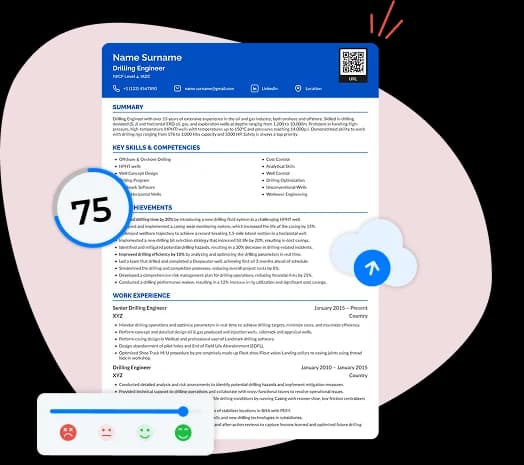
Resume Scanner
AI scanner performs 15 essential checks to ensure your resume is optimized for the jobs you're applying to.
SCAN RESUMESenior Data Engineer Resume Example #5: Leadership & Team Building
JENNIFER KIM
Senior Data Engineer — Technical Leader & Team Builder
San Francisco, CA | jennifer.kim@email.com | LinkedIn: /in/jenniferkim | (415) 555-0123
PROFESSIONAL SUMMARY
Senior Data Engineer with 9+ years of experience of building high-performing data teams and scalable data infrastructure and leading tech team. Expert in mentoring engineers, establishing engineering best practices, and fostering collaborative culture while delivering robust data platforms processing 100 TB+ monthly. Proven ability to drive technical excellence through knowledge sharing, code review standards, and hands-on architectural guidance. Passionate about developing people alongside technology, with track record of engineers promoted to senior roles under my mentorship.
CORE COMPETENCIES
● Technical Leadership: Engineering Mentorship, Technical Standards, Architectural Guidance, Code Review Practices
● Team Development: Career Development, Onboarding Programs, Technical Training, Knowledge Transfer
● Data Platform Technologies: Spark, Kafka, Airflow, dbt, Databricks, Snowflake
● Cloud Infrastructure: AWS (S3, EMR, Glue, Redshift, Lambda), GCP (BigQuery, Dataflow)
● Programming: Python, SQL, Scala, Java
● Collaboration: Cross-functional Teamwork, Stakeholder Management, Technical Communication
● Process Improvement: Agile/Scrum, Documentation Standards, Best Practice Establishment
PROFESSIONAL EXPERIENCE
TECHNOLOGY SOLUTIONS INC. | Senior Data Engineer & Technical Lead
San Francisco, CA | February 2019 — Present
● Lead data engineering team of 10 engineers (2 senior, 5 mid-level, 3 junior), providing technical direction, mentorship, and career development while maintaining hands-on involvement in platform architecture and critical projects
● Established engineering onboarding program reducing new hire ramp-up time from 6 weeks to 2 weeks through structured training, buddy system, and comprehensive documentation
● Architected and implemented data platform modernization initiative, migrating from legacy ETL tools to dbt and Airflow-based orchestration, improving developer productivity by 50% and data quality by 40%
● Created technical excellence frameworks including code review guidelines, testing standards, and design review processes adopted across engineering organization of 50+ developers
● Mentored 8 engineers over 4 years, with 5 promoted to senior positions and 3 transitioning successfully to data engineering from software engineering roles
● Drove adoption of DataOps practices including version control for data transformations, automated testing, and CI/CD for pipelines, reducing production incidents by 75%
● Led weekly technical workshops and brown bag sessions on topics like Spark optimization, dimensional modeling, and cloud architecture, fostering a culture of continuous learning
● Facilitated architecture review board evaluating technology choices, design patterns, and platform evolution, ensuring alignment with organizational goals and industry best practices
● Collaborated with product management, data science, and analytics teams to define data platform roadmap, balancing technical debt reduction with new capability development
● Championed diversity and inclusion initiatives within data engineering team, implementing inclusive hiring practices and creating welcoming environment for underrepresented groups
DIGITAL MEDIA COMPANY | Senior Data Engineer
Palo Alto, CA | March 2017–January 2019
● Designed and built real-time analytics platform processing 50M+ daily user events using Kafka, Spark Streaming, and Druid, enabling product teams to make data-driven decisions with sub-minute latency
● Led guild of 15 data practitioners (engineers, analysts, scientists) establishing data governance standards, sharing knowledge across teams, and defining common tools and patterns
● Developed internal Python library for data quality testing used across organization, providing reusable framework that reduced code duplication by 60% and improved reliability
● Mentored 2 junior engineers transitioning to data engineering, providing guidance on distributed systems concepts, SQL optimization, and cloud architecture
● Established documentation standards and Confluence-based knowledge base covering platform architecture, runbooks, and troubleshooting guides, dramatically reducing tribal knowledge
● Collaborated with infrastructure team on Kubernetes-based deployment strategy for data applications, enabling self-service infrastructure provisioning for data engineers
STARTUP ANALYTICS PLATFORM | Data Engineer
Mountain View, CA | August 2015 - February 2017
● Built core ETL pipelines using Python and PostgreSQL supporting analytics product serving 500+ enterprise customers
● Implemented automated monitoring and alerting for data freshness and quality, enabling proactive incident response
● Contributed to hiring process interviewing data engineer candidates and helping grow team from 3 to 12 engineers
● Documented best practices for data modeling and pipeline development, establishing foundation for team scaling
EDUCATION
Bachelor of Science in Computer Science
Stanford University, Stanford, CA | Graduated: June 2015
Focus: Databases and Information Systems
CERTIFICATIONS & TRAINING
● AWS Certified Data Analytics Specialty (2023)
● Certified Scrum Master (2021)
● “Engineering Leadership” — Stanford Continuing Studies (2022)
● “Mentoring in Tech” — Conference Workshop Attendee (2020)
TECHNICAL CONTRIBUTIONS
● Conference Speaker: “Building High-Performing Data Teams” — Data Engineering Summit 2024
● Published: “Effective Code Reviews for Data Engineers” — Engineering Blog (2023)
● Open Source: Core contributor to Apache Airflow (20+ merged PRs)
● Community: Co-organizer of Bay Area Data Engineering Meetup (500+ members)
Tailoring Your Senior Data Engineer Resume for ATS & Hiring Managers
When you submit your application, the ATS first parses your resume — extracting information like contact details, work history, education, and skills. This parsing creates a structured profile that the system uses for searching and scoring. Poor formatting can cause parsing failures where critical information gets lost or misinterpreted. The system then compares your parsed profile against job requirements, scoring based on keyword presence, experience length, education level, and other criteria defined by the employer.
That’s why you need to adapt the resume for both machine and human readers.
How to do it right:
1. Review the job description: scan for keywords like “data engineer with” … “Apache Spark”, “Kafka”, “real-time data”, “data warehouse”, data modeling”, “cloud platforms”, “big data”, “data governance”, “cost optimization”.
2. Include those keywords naturally in your summary, skills section, and bullets. One strong, readable sentence beats five awkward repetitions. Example JD says “real-time streaming with Kafka and Flink” → “Architected real-time streaming platform using Kafka and Flink that cut fraud detection latency from 8 hours to <90ms.”
3. Use Ctrl+F command (in text processor) to see repeats of keyword like “Experience with Apache Spark and Kafka”, “large-scale data platform”, “real-time data processing”, “data warehouses and lakes”, “data governance and data quality”, “large datasets from multiple sources”.
4. Put the money shot upfront. Lead bullets with the business result, then sprinkle the tech. Non-technical recruiters read the first 4–5 words; tech leads read the rest. Good: “Saved $2.1M annually by migrating on-prem Hadoop to Databricks + Delta Lake…” Bad: “Worked with Databricks and Delta Lake to migrate Hadoop…”
5. Mix hard and soft skills: technical stack + leadership/managing teams + cross-functional collaboration.
6. Use bullet points that start with action verbs: “Designed”, “Implemented”, “Optimized”, “Led”, “Automated”, “Collaborated”.
Keyword Density vs Natural Language:
While keywords matter, overstuffing your resume with disconnected terms creates an unreadable document that fails human review even if it passes ATS.
Integrate keywords naturally within achievement-focused bullet points. Instead of listing “Python Spark SQL Kafka Airflow” as a skills dump, write “Built Python-based ETL orchestration using Airflow to coordinate Spark jobs processing Kafka streams, with SQL-based data quality validation.”
This sentence contains the same keywords while demonstrating actual usage and capability.
Do the 10-minute tailor for every application: reorder your top 3–4 bullets, move the matching skill category to the top, drop the exact phrases from the JD into your summary and bullets.
That's all it takes. You go from 30% ATS match to 85–95% with tailored resume and still sound like a human.
Essential Keywords for Senior Data Engineers
Strategic keyword selection and placement dramatically impacts ATS scoring. These categories cover the most important terms for senior data engineer positions, drawn from hundreds of job descriptions across industries.
Platform & Architecture:
● Data platform, lakehouse architecture, data mesh, platform engineering, system design
● Microservices architecture, API development, distributed systems
● Data architecture, architectural patterns, scalability, fault tolerance
● End-to-end solutions, infrastructure design, technical roadmap
Big Data Technologies:
● Apache Spark (PySpark, Scala), Spark Streaming, broadcast joins, catalyst optimizer
● Hadoop ecosystem (MapReduce, HDFS, Hive, Pig, HBase)
● Apache Kafka, Kafka Connect, Kafka Streams, event-driven architecture
● Apache Flink, stream processing, complex event processing
● Presto, Trino, distributed query engines
Cloud Platforms:
● AWS: S3, EMR, Redshift, Glue, Athena, Lambda, Kinesis, RDS, DynamoDB, Step Functions
● Azure: Databricks, Data Factory, Synapse Analytics, Data Lake Storage, Event Hubs
● GCP: BigQuery, Dataflow, Pub/Sub, Cloud Storage, Dataproc, Cloud Composer
● Multi-cloud, cloud-native, serverless, cloud migration, hybrid cloud
Orchestration & Workflow:
● Apache Airflow, DAG development, workflow automation
● Luigi, Prefect, AWS Step Functions, Azure Data Factory pipelines
● CI/CD pipelines, Jenkins, GitLab, automated deployment
● Infrastructure as Code, Terraform, CloudFormation
Data Storage & Databases:
● Relational databases: PostgreSQL, MySQL, Oracle, SQL Server
● NoSQL databases: MongoDB, Cassandra, DynamoDB, Redis, Elasticsearch
● Data warehouses: Snowflake, Redshift, BigQuery, Synapse, Teradata
● Data lakes, Delta Lake, Apache Iceberg, data lakehouse
Programming & Scripting:
● Python (pandas, NumPy, PySpark), Scala, Java
● SQL (advanced queries, window functions, CTEs, query optimization)
● Bash scripting, shell automation
● Code reviews, best practices, clean code
Leadership & Strategic Terms:
● Technical leadership, mentorship, mentored engineers, team development
● Cross-functional collaboration, stakeholder management, executive communication
● Architected, led, drove, established, spearheaded, transformed
● Technical strategy, roadmap planning, architectural decisions
● Cost optimization, scalability, performance tuning, capacity planning
● Data governance, data quality, data lineage, compliance (GDPR, HIPAA, SOC 2)
Data Engineering Processes:
● ETL/ELT pipelines, data integration, data ingestion, batch processing
● Real-time processing, streaming pipelines, event streaming
● Data modeling, dimensional modeling, star schema, data vault
● Data quality, data validation, Great Expectations, automated testing
● Data cataloging, metadata management, data discovery
DevOps & Infrastructure:
● Docker, Kubernetes, containerization, orchestration
● Infrastructure as Code, Terraform, CloudFormation, Ansible
● Monitoring and observability: Prometheus, Grafana, CloudWatch, Datadog
● CI/CD, automated testing, deployment automation
Business Impact Terms:
● Cost reduction, cost savings, cost optimization, ROI
● Performance improvement, latency reduction, query optimization
● Scalability, reliability, availability (99.9% uptime), SLA
● Revenue enablement, business intelligence, data-driven decisions
● Real-time analytics, actionable insights, strategic decisions
Formatting: The Non-Negotiable Rules (2026 Edition)
You can have perfect bullets and still get auto-rejected because the parser turned your resume into alphabet soup.
Here’s the exact formatting checklist every senior data engineer we work with uses.
Do this:
● Single-column layout only
● Standard section headers → Work Experience / Professional Experience → Technical Skills / Skills → Education → Certifications (if separate)
● Fonts: Arial, Calibri, Helvetica, or Times New Roman Body 10.5–12 pt, name 16–20 pt, section headers 13–15 pt
● Standard round bullets (•) — nothing fancy
● Dates: Jan 2020 – Present or 01/2020 – Present (pick one and stay consistent)
● Contact info at the very top, plain text (never in header/footer) John Doe Senior Data Engineer | Seattle, WA | 415-555-1234 | john.doe@email.com | linkedin.com/in/johndoe
● Save as PDF (looks exactly how you designed it) unless the posting screams for .docx
Never do this:
● Tables, text boxes, columns, smart-art, icons, logos
● Skills or dates in header/footer
● Creative section titles (“My Impact”, “Tech Arsenal”, “The Journey”)
● Weird bullets (✓ ★ → ➜)
● Images, charts, or background shading
● Tiny fonts to cram everything on one page
● Two different date formats in the same document
Two pages are 100% fine at the senior level. Trying to force everything onto one page with a 9 pt font and zero margins is the fastest way to look desperate and get mis-parsed.
Export as PDF from Google Docs or Word → open the PDF and scroll. If it still looks clean and readable, you’re good.
That’s literally it. Ten minutes of disciplined formatting beats weeks of wondering why nobody’s calling.
Sample Senior Data Engineer Resume #6 — Fin Tech
John Doe
Senior Data Engineer — Fin Tech
Location: Seattle, WA
Phone: (555) 123‑4567
Email: john.doe@email.com
LinkedIn: linkedin.com/in/johndoe
GitHub: github.com/johndoe
Professional Summary
Senior Data Engineer with 10 years of experience in the field of data engineering, specializing in cloud computing, data modeling, and robust data pipelines. Proven ability to design and implement scalable cloud‑based data systems across Amazon Web Services, Microsoft Azure, and Google Cloud environments. Hands‑on expertise with Hadoop, Spark, Kafka, and Databricks, ensuring data accuracy, privacy, and security while reducing data processing time by 40%. Adept at managing complex projects, mentoring team members, and collaborating with cross‑functional departments to deliver data‑driven decision-making and measurable business improvements.
Technical Skills
● Data Platforms & Architecture: Data lake design, data warehouses, lakehouse, data mesh, integration frameworks
● Big Data Processing: Hadoop, Spark (PySpark, Scala), Pig, Hive, Presto
● Streaming & Real‑Time: Kafka, Flink, Spark Streaming, Kinesis, Pub/Sub
● Cloud Computing: AWS (EC2, S3, Redshift, Glue), Microsoft Azure (Data Factory, Synapse, Databricks), Google Cloud (BigQuery, Dataflow)
● Databases: PostgreSQL, MySQL, Oracle, MongoDB, Cassandra, DynamoDB, NoSQL systems
● Programming Languages: Python, Scala, Java, SQL, Bash, JavaScript
● Workflow & Automation: Airflow, Nifi, Informatica, Talend, Prefect
● Data Security & Governance: Data accuracy validation, privacy policy compliance, GDPR, data lineage, QA frameworks
● Additional Tools: Git, Jenkins, Terraform, TensorFlow, API development, server management
Work Experience
Lead Data Engineer — Fortune 500 Retailer
Seattle, WA | 2019 – Present
● Architected and managed cloud‑based data lake ingesting 2PB/month, ensuring scalability and accuracy across multiple datasets.
● Implemented a real‑time fraud detection pipeline using Kafka + Flink, preventing $5M in fraudulent transactions annually.
● Reduced data processing time by 35% through optimized SQL queries, indexing strategies, and automation of workflows.
● Mentored 6 engineers; 4 promoted to senior roles within 18 months.
● Collaborated with cross‑functional teams in product, analytics, and operations to align technical solutions with business objectives.
Senior Data Engineer — Global Financial Services New York, NY | 2015 – 2019
● Migrated legacy data warehouse (Oracle, 50TB) to Snowflake, resulting in $1.2M annual savings and improved query times by 10x.
● Designed and implemented robust data pipelines integrating raw data sources into actionable insights for risk analysis.
● Championed privacy and security initiatives, ensuring compliance with internal policy and external regulations.
● Delivered high‑availability data services with 99.99% uptime, decreasing downtime incidents by 80%.
Data Engineer Associate — IBM Consulting Boston, MA | 2012 – 2015
● Developed ETL workflows using Python + Airflow to automate data ingestion from multiple sources.
● Enhanced data accuracy by implementing validation checks and error‑handling frameworks.
● Supported project management efforts, contributing to successful delivery of cloud migration initiatives.
Education
Master of Science in Computer Science — University of Washington Bachelor of Science in Information Systems — Boston University
Certifications
● Microsoft Certified Azure Data Engineer Associate
● AWS Certified Solutions Architect
● Databricks Certified Data Engineer Professional
Languages
English — Native; Spanish — Fluent
Conclusion: Making Your Senior Data Engineer Resume Stand Out
At the senior level, the data engineer resume isn’t just a list of technologies — it’s a story about your work, your achievements, and how you’ve helped employers make data‑driven decisions. Recruiters and hiring managers want clarity, accuracy, and impact. That means every section should emphasize measurable improvements, hands‑on experience, and the ability to manage complex data environments.
Think of your resume as both a technical document and a communication tool. ATS systems will parse your file for keywords like data lake, cloud computing, Hadoop, Spark, Kafka, data modeling, and data security. Human reviewers will look for quantifiable accomplishments: reduced data processing time, improved workflows, decreased expenses, or enhanced data accuracy. The best data engineer resumes balance both — ensuring keywords are integrated naturally while telling a compelling story of growth, problem‑solving, and leadership.
Remember these tips:
● Lead with impact. Show how your contributions resulted in tangible success — cost savings, scalability improvements, or increased team productivity.
● Organize your skills section. Group related tools and programming languages clearly, rather than dumping a vague list.
● Validate your expertise. Certifications from Microsoft, Amazon, or Databricks prove proficiency and commitment to staying current.
● Highlight transferable skills. Communication, mentoring, and project management are crucial for senior engineers working with cross‑functional teams.
● Avoid mistakes. Don’t overload with outdated technologies, vague statements, or formatting errors that confuse ATS parsing.
Ultimately, your data engineer resume should stand apart by showing you’re not just maintaining existing systems — you’re engineering solutions that deliver measurable business value. When recruiters read your profile, they should see a seasoned professional who can manage data‑related projects, ensure privacy and security, and drive improvements across departments. That’s what makes your resume not just ATS‑ready, but interview‑ready.

Written by
Recent Posts

Pub: 25 Dec 2025 - Upd: 01 May 2026
52 min. read
Junior Data Engineer Resume Examples That Actually Get You Interviews (2026 Edition)
Pub: 11 Oct 2025 - Upd: 01 May 2026
54 min. read
Big Data Engineer Resume Examples (2026) + Complete Writing Guide

Pub: 23 Jan 2025 - Upd: 01 May 2026
8 min. read
How Engineers Can Find a Job in the Middle East, Earn $100,000, and Enjoy Exclusive Benefits