

Published · 8 min. read
Why Do So Many Engineers Leave the Profession After University?
Why do so many engineers leave their profession after graduating from university and choose other fields? In this article, I will share my opinion and try to go over the main reasons.
I’m Alex, a UK Chartered Engineer, European Engineer, and certified career coach for engineers.
Low Salaries in Engineering
Let’s start with what I think is the main reason why many engineers move to other industries. That reason is low salaries in engineering professions. Young specialists often find that their work is undervalued compared to other fields like IT, finance, or marketing.
In IT, for example, salaries can grow quickly, while engineering careers require much more time and effort to achieve financial success. In today’s world, there are many jobs where people can earn good money without a university degree. I talked about this in another article about higher education, so check that out too.
I believe that an engineer, just like a doctor, should earn at least a few thousand dollars per month right after graduating from university. This should be required by law. If it were like this, the profession would become much more attractive and respected, and people would be more likely to stay.
Of course, there should also be significant salary growth over time to keep professionals motivated and to retain talent. For example, an engineer with 10 years of experience should earn no less than $10,000 per month NET. If we are talking about offshore jobs, the salary should be no less than $15,000 per month NET.
As a career coach, I speak with many engineers, and sometimes it’s heartbreaking to hear people say that they earn only €1,000-1,500 per month in many European countries, even with 10-15 years of experience. I honestly don’t understand why people stay in this job for such a long time. It would be easier to take some IT or design courses and start earning at least the same money working remotely from home. And after just a couple of years in a new profession, they could earn at least €2,000-3,000 per month in Europe.
This is why it’s clear that young engineers, once they realize the reality of their profession, move to other fields. In countries like Australia, Canada, or the USA, engineering salaries are much better, but they could still be higher.
Another thing I would like to mention is that many universities and colleges still focus too much on theory instead of teaching practical skills that are actually needed in the modern job market. Students spend years trying to learn complex technical subjects, but after graduation many of them still don’t understand what type of engineering work they really want to do. In reality, companies today value hands-on experience, communication, adaptability, and problem-solving much more than just academic knowledge. A lot of young engineers realize this only after starting their first job, and that is why many of them begin doing something completely different outside engineering, where career growth feels faster, work feels more modern, and the opportunities seem much more exciting.
As a Certified Professional Career Coach (CPCC) and Certified Professional Resume Writer (CPRW), who has helped 50+ engineers land international expat jobs abroad, I understand very well why many engineers start looking outside the profession. When technical responsibility is high but career growth and salary growth are slow, people naturally begin to compare engineering with other industries.
High Level of Stress and Responsibility
Another reason, based on my own experience, is the high level of stress and responsibility. Engineers, especially in fields like construction, design, and oil and gas, carry a huge amount of responsibility for their work. This creates high stress levels and can push young professionals to look for more stable jobs with fewer strict requirements.
It is obvious that salary and responsibility are often not balanced. Engineers have enormous responsibilities, constant overtime, irregular working hours, shift work, and offshore assignments. So, young engineers prefer careers that not only offer better pay but also come with less stress, more flexible schedules, and the option to work remotely.


Lack of Creativity and Professional Development
Another reason is the lack of creativity and professional development. Engineers often do routine tasks that don’t allow them to use creative thinking. Their daily work includes paperwork, reports, schedules, and documentation. This makes engineers look for more flexible and creative jobs, such as working in startups or industries related to innovation and artificial intelligence.
The same applies to learning and development. Not many companies invest in the development of their employees. Smaller companies often don’t want to spend any money on employee training at all. And only a few even know what an individual development plan is. Even in large companies where such programs exist, they are rarely implemented properly. Most of the time, they exist only for formal reporting purposes.
Believe me, I know what I am talking about, and I have a lot to compare with. For example, in Shell, the development of engineers is at the highest level. Their Young Professionals Program is definitely one of the best in the world. When I worked at Shell, I always had an individual development plan for the year, and my managers took this very seriously.
At the end of each year, we had a face-to-face session where we spent 2-3 hours discussing the results of the past year. I prepared a pile of evidence showing what I had accomplished so my manager could fairly assess my performance and help me plan my next steps for career growth. Then we had another session to set goals for the next year.
After learning these best practices, I later applied them when I became a manager myself. The company invested tens of thousands of dollars in my development every year. Of course, this made me feel valued and motivated to work and contribute to the company.
As a Chartered Mechanical Engineer (CEng), European Engineer (EUR ING), and Certified Maintenance and Reliability Professional (CMRP) with 17+ years of experience in the oil and gas industry, I have seen how strongly proper development, mentoring, and management culture affect an engineer’s motivation. When companies invest in people, engineers are much more likely to stay, grow, and bring real value to the business.
Workplace Conditions and Company Culture
Another reason is workplace conditions and company culture. In many modern workplaces, working conditions can be poor. There is outdated equipment, a low level of technological advancement, and a lack of innovative approaches. This can discourage specialists and push them to look for more modern and exciting career paths.
Company culture in many countries is also far from ideal. It surprises me how some big companies, especially oil and gas companies that earn billions of dollars, don’t provide good meals for their employees. Oilfield workers should be served red caviar and salmon every day!
Look at how companies like Google, Apple, and Microsoft do it. Their food is not only free but also of the same quality as a five-star hotel buffet. Employees can even bring their families, and the food is available from early morning until late at night. These companies do everything to keep their employees in the office for as long as possible and make them feel comfortable. At any time, you can take a break and eat something.
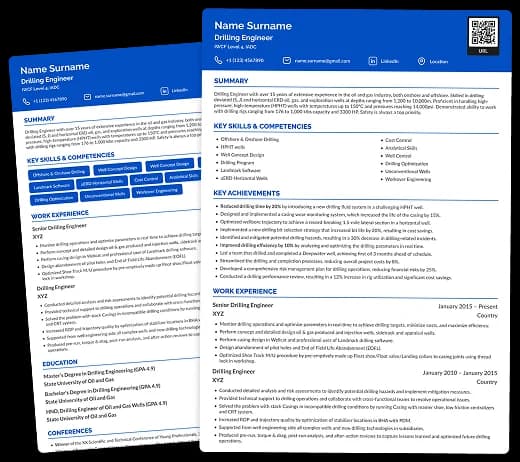
Resume Builder
Use proven engineering templates to build a job-winning resume in minutes.
CREATE RESUMEChanging Interests
Another reason I would highlight is changing interests. While studying at university or working in the field, many engineers realize that engineering is simply "not for them."
Modern trends like digitalization, startups, and artificial intelligence create new career opportunities that attract young professionals looking for more dynamic and promising careers. I have talked about this before in below video about higher education. The problem is that students don’t get proper career guidance in school to help them identify their talents, interests, and strengths.
It has already been proven that people achieve greater success in life when they work in a field they love. If career guidance were available in schools to help students choose professions based on their talents and interests, there would be fewer university dropouts, less professional burnout, and fewer career changes. Overall, people would be much more productive.

Written by
Recent Posts

Pub: 17 Apr 2026 - Upd: 01 May 2026
8 min. read
The Main Advantages, Disadvantages, and Salaries of Engineers