
11 min. read
Is Higher Education Even Necessary?
Is higher education even necessary? This is a question many modern high school students ask themselves, not just in one country, but all over the world.
Hey, guys! I’m Alex, a UK Chartered Engineer, European Engineer, and also a certified career coach for engineers.
The World Has Changed
Today, I want to talk about a topic that goes beyond just education. I believe that the modern world has changed completely compared to the 20th century.
In the past, most people, no matter where they lived, had very similar life goals: family, love, children, education, career, a house. But today, people define happiness and success in their own way. This is not necessarily a bad thing. Everyone is unique, and each person should live their own life.
New lifestyles have emerged that never existed before. For example, digital nomads are people who work remotely and travel the world, living in different countries for weeks or months. Another group, NEETs, people who are not in employment, education, or training, choose not to work or study at all. Instead, they prioritize freedom, travel, and spending time with friends.
Why People Think Differently Today
The 20th century was marked by wars, economic crises, and global conflicts. For most people, the goal was simple: survival. Any job was considered valuable, and people worked hard just to provide for their families.
But today, the world has changed. More and more people ask themselves, “Who am I?”, “What is the purpose of life?”, “What is my mission in this world?”
With the rise of the internet, social media, and technology, people now see how others live around the world. They travel more, have access to unlimited information, and live in an age where consumer culture dominates. The gap between the rich and poor has grown wider, but millionaires make up less than 1% of the global population. Meanwhile, social media is flooded with content about the lives of the wealthy, encouraging the remaining 99% to spend more money, further enriching the top 1%.
By watching this, many people start thinking, “Wait, is it really possible?” So their interest in traditional jobs fades, and they begin looking for alternative paths to success.
But most people still live by old beliefs: finish school, go to university, get a stable job, build a career, buy a house, start a family. Honestly, I also grew up with these traditional ideas, but I understand that the world is not the same anymore. Younger generations, like Gen Z, born in 1995-2009, and Gen Alpha, born in 2010-2025, think very differently.
Why Traditional Education No Longer Fits the Modern World
I believe that today’s school and university education does not match the realities of the modern world. The education system has barely changed in decades, even though the world has evolved more in the last 10-20 years than it did in the previous 100-200 years.
Look at the leaders of most governments. Many of them are 60-80 years old, born in the post-war industrial era. They still believe that children should go to school, attend university, and work for their country for life. That’s how things used to be.
But today’s youth want something different. They dream of freedom, travel, and remote work. There is a huge gap in understanding between older generations and young people.
And in this video I've explained if you need to get Master or PhD:
How I Would Change the Education System
If I could redesign the education system, I would start with career guidance from the early school years. Studies show that when people do what they love, they achieve greater success. More importantly, they feel motivated and inspired, which benefits both them and society.
From a young age, professional career coaches should help children discover their talents and strengths. Everyone has a talent. Some students could start working immediately after school in fields where they naturally excel. Others could continue to college or university, but only in fields that match their true abilities.
For the most gifted students, governments should provide specialized schools and universities, along with resources to maximize their potential. This benefits both sides: the student receives a top-tier education, while the country gains future leaders, innovators, and inventors.
As a certified career coach who has helped many engineers build international careers, I can clearly see that the biggest problem is not a lack of ability, but the fact that most people spend years moving in the wrong direction simply because no one helped them understand their strengths early enough. When a person studies in a field that truly matches their talents, their motivation, results, and long-term career growth are completely different.
Why Most People Want Higher Education
Let’s be honest. More than 90% of people pursue higher education just to find a job. And why do people want a job? To earn money. Most of the time, it doesn’t even matter whether they enjoy the work.
Ask yourself, “Why do I want to go to university?” If your answer is “To make money,” then no, you do not necessarily need a university degree in today’s world, or even to become a millionaire.
In my book Engineer-Millionaire, I discuss this in more detail.
Real-Life Examples
One of my friend’s sons finished high school. While still in school, he learned programming and took six months of online coding courses. By the time he graduated, he was already earning up to $1,000 per month as a freelancer. A company then offered him a remote programming job with a salary of $2,500 per month.
Instead of spending 4-6 years in university, he is now working and taking online courses relevant to his job, paid for by his employer. This is the future of education. Traditional university degrees are becoming less necessary in many industries.
Another example is a YouTube thumbnail designer I worked with. He started designing at 14 years old, learning Adobe Photoshop through free YouTube tutorials. He discovered his talent for design and was so passionate about it that his skills improved rapidly.
By 17 years old, he was offered a job paying $1,500 per month, without a university degree. He does plan to study architecture at university, but not just to get a job. Instead, he wants to develop his talent professionally and eventually start his own design company. I have no doubt he will succeed.
Many students realize too late that they do not like their chosen field. Universities see high dropout rates, and many graduates switch careers later in life.
For example, my sister studied textile engineering for five years. After graduating, she put her diploma on the table and told our parents, “Here’s your diploma.” She then went to medical school, graduated with honors, earned a master’s degree in physical culture, and has been happily working in her field for over 15 years.


The Real Problem Is the Lack of Guidance
The problem is not the students. It is the lack of career guidance in schools. If schools helped students discover their true strengths, there would be fewer dropouts, fewer career changes, and more people feeling fulfilled in their jobs.
In an ideal world, higher education should help you develop your talent and maximize your potential. If you have a natural gift for physics, for example, then studying at a university can expand your knowledge and prepare you for a career in research.
As a Chartered Mechanical Engineer and a Certified Maintenance and Reliability Professional with more than 17 years of experience in oil and gas, working in environments from -50 to +50 degrees and in companies like Shell and Saudi Aramco, I strongly support serious higher education in professions where deep technical knowledge, responsibility, and safety matter. You cannot become a strong engineer, doctor, or scientist through a few short online courses alone. But at the same time, higher education should strengthen your talent, not replace the search for it.
My Final View on Higher Education
I’m sure you have heard the phrase, “Being a doctor is a calling.” And it’s true. Medicine is one of the highest-paid professions in the world, but that does not mean you should become a doctor just for the money.
The same applies to engineering and many other fields. Students often ask me, “Which profession should I choose to earn more money?” But the real question is not about how much you earn. It is about whether you love what you do. If you spend your life in a job you hate, no amount of money will make you happy. Your entire life will feel like a prison.
Just look at how many people today are turning to retreats, meditation practices like Vipassana, and other spiritual healing methods. I believe that one of the main reasons for this is a lack of passion for their work. At some point, when a person does not love what they do, they simply burn out.
Confucius once said, “Choose a job you love, and you will never work a day in your life.”
What If You Think You Have No Talent?
I think there is still one more question left: “What about those who believe they have no talents?” At least, that is what you may have convinced yourself of.
First of all, I can say with confidence that everyone has a talent. Being talented does not mean you have to be a child prodigy or win a Nobel Prize. That is not what I am talking about. Talent is a certain ability or potential that becomes visible with practice and experience.
Yes, there are people who are born with strong, obvious talents, but there are also those with hidden talents that need the right conditions to develop.
Just because you are not an Olympic champion, have not won the Ballon d’Or, an Oscar, or a Nobel Prize does not mean you are untalented or unsuccessful. In life, there will always be someone who is more successful, wealthier, stronger, and so on. But that does not mean you are not good enough. Define your own criteria for happiness and success.
The second problem is that most people have never even tried to find or develop their talent. They assume that talent should be something inborn, and if they do not see it immediately, they decide that it simply does not exist.
But have you ever actually searched for it? How many of you have ever visited a career counselor? How many of you have gone through a personal strengths assessment to understand what you are naturally good at? Probably only two or three out of a hundred people.
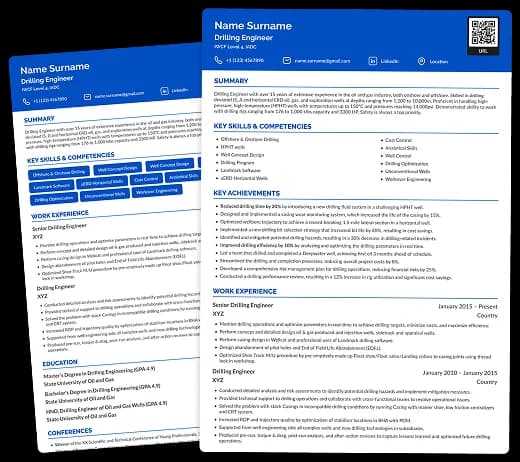
Resume Builder
Use proven engineering templates to build a job-winning resume in minutes.
CREATE RESUMEFinal Thought
Instead of following the crowd, find what excites you. If you’re unsure, seek career guidance early, preferably while still in school.
At the same time, it’s important to stay realistic: despite all the changes, many college graduates still achieve strong career results, and americans still debate whether going to college is worth the time and investment. The key point here is not the degree itself, but how you use it, whether it aligns with your strengths, and whether it actually helps you move toward the life and career you want, rather than just following a path that no longer fits the modern world.

Written by
Recent Posts


Pub: 31 Jul 2025 - Upd: 01 May 2026
12 min. read
Time Management for Engineers: How to Be Productive Without Burning Out
Pub: 14 Jan 2026 - Upd: 01 May 2026
18 min. read
Electrical Engineering Technician Resume: Examples, Skills & Tips (2026)