Published · Updated · 11 min. read
Drilling Engineer Certifications: Office, Rig or Supervisor?
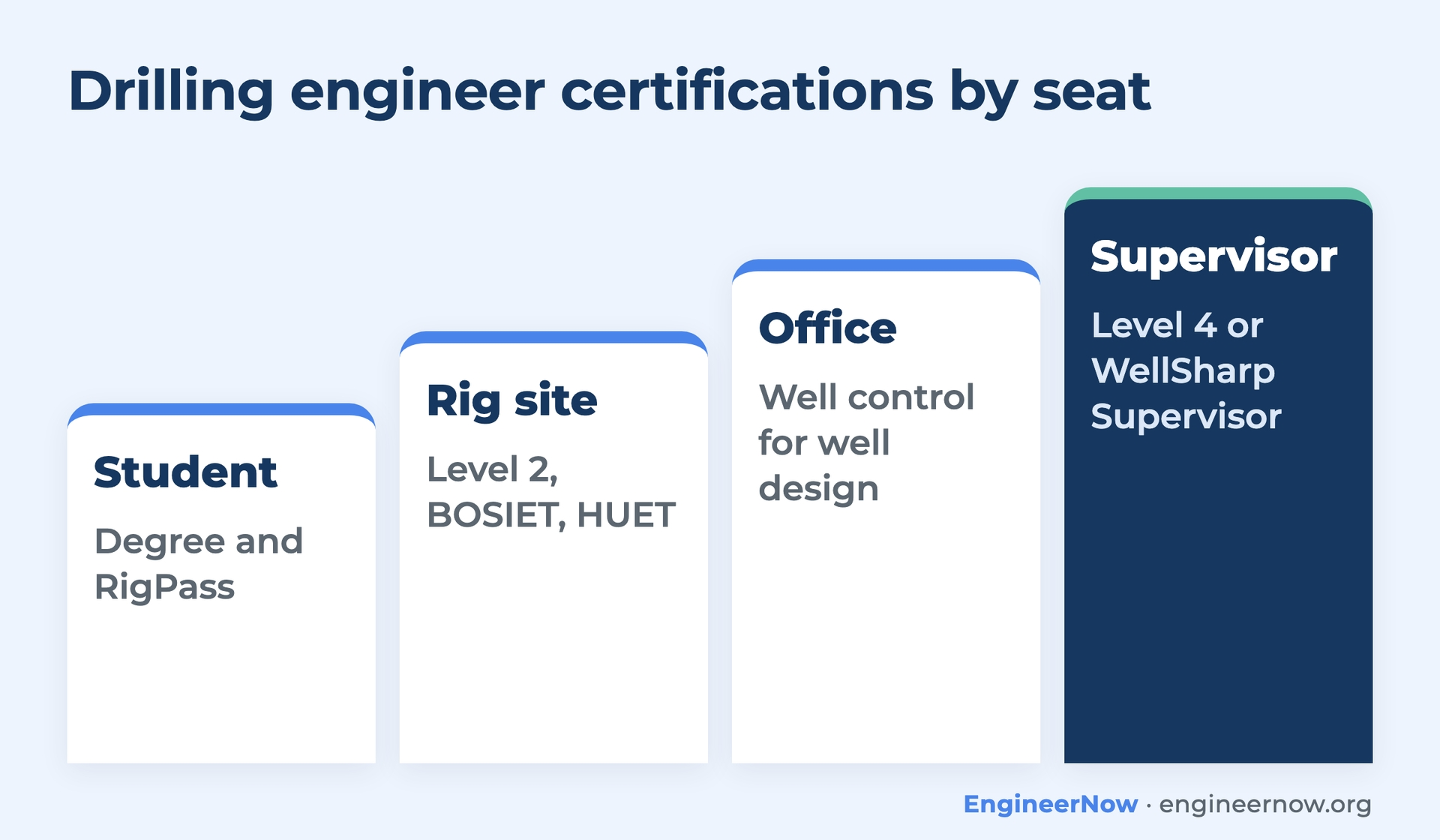
Drilling engineer certifications depend on where you sit: the rig site, the office or the supervisor's chair. Most people start with rig safety and well control training at the level the role needs, from IWCF or IADC WellSharp. Offshore adds BOSIET and HUET, and the supervisory level is for the person who oversees well control, not for every engineer.
I'm Alex, a UK Chartered Engineer and European Engineer (CEng MIMechE, EUR ING). Let's be honest from the start: I'm not a drilling engineer. I'm a mechanical engineer, and at Saudi Aramco I worked offshore as a rotating equipment engineer, flying out by helicopter on Sunday and back on Thursday.
So every requirement below comes from the issuing bodies' official pages. Let's go seat by seat.
What Certifications Does a Drilling Engineer Need?
The short answer: a degree, a safety orientation, well control training at the right level and, offshore, survival training. Career guides and job ads list much the same entry qualifications. The long answer depends on your seat.
IWCF explains that its programmes follow guidance in IOGP Report 476. That guidance "helps determine appropriate training levels based on role, experience, and operational environment". The second body is the International Association of Drilling Contractors (IADC). It says its WellSharp program "generally conforms with and supports IOGP's 476 Document." So both bodies tie the level to your role, not to your ambitions.
That's why a list of "top 10 drilling certifications" doesn't help much. Ask which certificate your next seat requires.
Well control is only one part of drilling engineering. Energy companies also value deeper knowledge of drilling fluids, the reservoir and advanced drilling topics, and professionals often study these through university modules or provider courses. I haven't checked any specific course on those subjects, so I won't name one here. Look at the provider's own page for the exact title and level.
Before Your First Rig: Degree and RigPass
First comes the degree. A degree in petroleum engineering is the obvious one, but Prospects, the UK careers service, also lists mechanical, civil, chemical and marine engineering for the drilling industry. If you want to become a drilling engineer and you're still choosing, here's my view on the best engineering degrees for a career like this.
Then safety. IADC RigPass is described as "a standardized safety orientation program for all oil and gas operations." It prepares new employees for most operating environments, onshore or offshore. A good detail for students and graduate engineers: IADC says student certificates do not expire.
Safety training before your first rig is not a box to tick. Oil rig certifications exist so people work safely and go home. I know what happens when something goes wrong.
I was poisoned by hydrogen sulfide while working on platforms in the Persian Gulf, and it was a terrible experience.
On the Rig Site: Well Control Certification and Offshore Training
For well-site work, the first well control certification to know is the IWCF Drilling Well Control programme. IWCF recommends Level 2 "for well-site based positions whose action or inaction could directly influence well control assurance."
Level 2 has no simulator. You pass a written exam in two parts, equipment and principles and procedures, with 70% in each. The course is at least 20 hours, and the certificate is valid for 5 years. The learning part can be completed online, but the assessment must be completed at an accredited training centre.
Level 3 is a different seat. It's for "Equipment Operators who perform actions to prevent or respond to well control incidents". On the simulator, you're assessed in the role of the driller, the person on the rig floor during drilling operations. The course is at least 32 hours, and the certificate lasts 2 years.
What the employer asks for varies, so a wellsite drilling engineer takes the level named in the job ad.
Offshore adds survival training. OPITO BOSIET is for people new to the offshore oil and gas industry, about 20 hours 40 minutes of training, refreshed with FOET within 4 years. HUET, the helicopter escape course, takes about 7 hours 10 minutes and is valid for 4 years. The rest of offshore life is in my guide for every offshore engineer.
In the Office: Well Control for Well Design
Most certification lists skip this seat. Prospects describes a common path: two to four years at the wellsite, then an office-based design role. That means casing design, well planning and daily technical support to the wellsite.
For them, IWCF has a separate programme, Well Control in Design and Lifecycle Management. It supports competency in "designing wells, planning well operations, and maintaining their integrity". One of its stated aims is well control competence for engineers in office-based functions who support rig and wellsite operations.
In practice, office engineers work with drilling processes and the barrier systems that keep a well under control, so a certified office engineer has the well control side assessed.
The compulsory topics include holistic design, barrier management, cement integrity, dealing with pressure influx and lifecycle well integrity. It's an instructor-led classroom course of at least 28 hours. The assessment is a 90-minute written test with 30 questions plus a case study project report. IWCF recommends refresher training before recertification every five years.
If you need a petroleum engineering certification for office work, this is the one. It builds the knowledge and skills behind the actual work: well design, barriers, integrity over the life of the well.
Drilling Supervisor: IWCF Level 4 or IADC WellSharp Supervisor
The drilling supervisor, sometimes called the company man, is the seat where Level 4 belongs. It's the field seat with decision authority on the wellsite. IWCF Level 4 is for supervisors, with two written tests at 70% each and a simulator assessment where you play the supervisor. The course is at least 32 hours and the certificate is valid for 2 years. You choose surface BOP operations or combined surface and subsea.
The other option is IADC WellSharp. Its drilling courses go from Awareness and Introductory to Driller and Supervisor, with surface stack or combined surface and subsea versions available. IADC says assessments are independently proctored through a centralized online testing system, and the exam database has more than 3,300 questions. The Driller and Supervisor courses must spend 30% of course time on simulation.
IWCF or IADC? Neither body publishes a ranking, and both point to IOGP 476. The operator, the drilling contractor or service company and the region decide.
| Certificate | Who it's for | How you're assessed | Valid for |
|---|---|---|---|
| IADC RigPass | New employees, onshore or offshore | Safety orientation course | Student certificate does not expire |
| IWCF Level 2 | Well-site positions that influence well control | Two written tests, 70% each | 5 years |
| IWCF Level 3 | Equipment operators, the driller | Written tests and simulator | 2 years |
| IWCF Level 4 | Supervisors | Written tests and simulator | 2 years |
| IWCF Well Control in Design and Lifecycle Management | Engineers in office-based functions | 30 questions in 90 minutes and a case study report | Refresher every 5 years recommended |
| IADC WellSharp Driller or Supervisor | Driller or supervisor level | Proctored online test, 30% of course time on simulation | Not stated on the IADC page |
| OPITO BOSIET | People new or returning to offshore work | 20 hours 40 minutes of training | Refresh with FOET within 4 years |
| OPITO HUET | People new or returning to offshore work | 7 hours 10 minutes of training | 4 years |
In my video I go through the key certificates for drilling engineers and supervisors. One correction: there I say a drilling engineer will likely need Level 4. IWCF's own guidance ties Level 4 to supervisors, so follow the level in the job ad. My view from the video still stands: either IWCF or IADC is enough for most applications, and having both can give you a slight edge.
Senior Roles: PE or Chartered Engineer
None of these is a ticket to the rig. They're for professional development: lead roles, design sign-off and international roles.
In the US, NCEES says licensing boards generally require a bachelor's degree from an EAC/ABET-accredited program. Most states require four years of work experience, and you typically must pass the FE exam and the PE exam. The licence comes from the state board, so check the state where you plan to work.
In the UK, the Engineering Council says the CEng title "is open to anyone who can demonstrate the required professional competences and commitment". You apply through a licensed professional engineering institution. You can become a Chartered Engineer even without an accredited degree. I'm CEng MIMechE myself. If your target is the Gulf, here's how engineers work in the Middle East and what they earn.
How to List Drilling Certifications on Your Resume
Make the level and the expiry date easy to find. Write each credential on one line: name, body, level, surface or subsea, and valid-to date. For example: "IWCF Drilling Well Control, Level 4, Surface and Subsea, valid to [month year]".
Level 3 and Level 4 certificates last 2 years, so keep them current: check the dates every time you update the resume.
One of the best practices for your career is to keep a simple list of every certificate with its expiry date. Certified professionals who renew on time avoid a gap that could cost them an assignment.


Certificates open the door to the seat you want. Pick the one your next seat requires, pass it properly and keep it valid. And if you want my personal advice on which certificate to pay for first or how to move into international drilling jobs, book a consultation. Good luck, friends.
Is the IWCF certificate free?
I didn't find a price on IWCF's own pages. IWCF's beginner's guide says you first register in its FORUM system to get a Candidate Registration (CR) number, which is used for all course bookings. The assessment takes place at an accredited training centre, so ask the centre for the full cost before you book.
How long is the training to work on an oil rig?
It depends on the seat. Official minimums: OPITO BOSIET is about 20 hours 40 minutes and HUET about 7 hours 10 minutes. IWCF Level 2 is at least 20 hours, and Levels 3 and 4 at least 32 hours each. IADC doesn't state a length for RigPass on its page, so ask the training provider.
Which certification is best for oil and gas?
There is no single best one. For drilling, it's well control at the level your role needs; for offshore work, BOSIET and HUET. In maintenance and reliability, my own certification is CMRP. Look at the job ads for your target seat and count which certificates they ask for.
IWCF or IADC WellSharp: which is better?
Neither body publishes a comparison, and both point to IOGP Report 476 for choosing levels by role. IWCF Levels 3 and 4 combine written tests with a simulator assessment. IADC WellSharp uses independently proctored online tests and spends 30% of Driller and Supervisor course time on simulation. The operator and the region usually decide, so follow what the job ad asks for.

Written by
Recent Posts


Pub: 18 Nov 2025 - Upd: 01 May 2026
8 min. read
Essential Certifications for Mechanical Engineers to Build an International Career